- An A/C system is sealed. If refrigerant is low, it usually leaked out somewhere.
- A recharge without finding the leak often feels great for a while, then fades again.
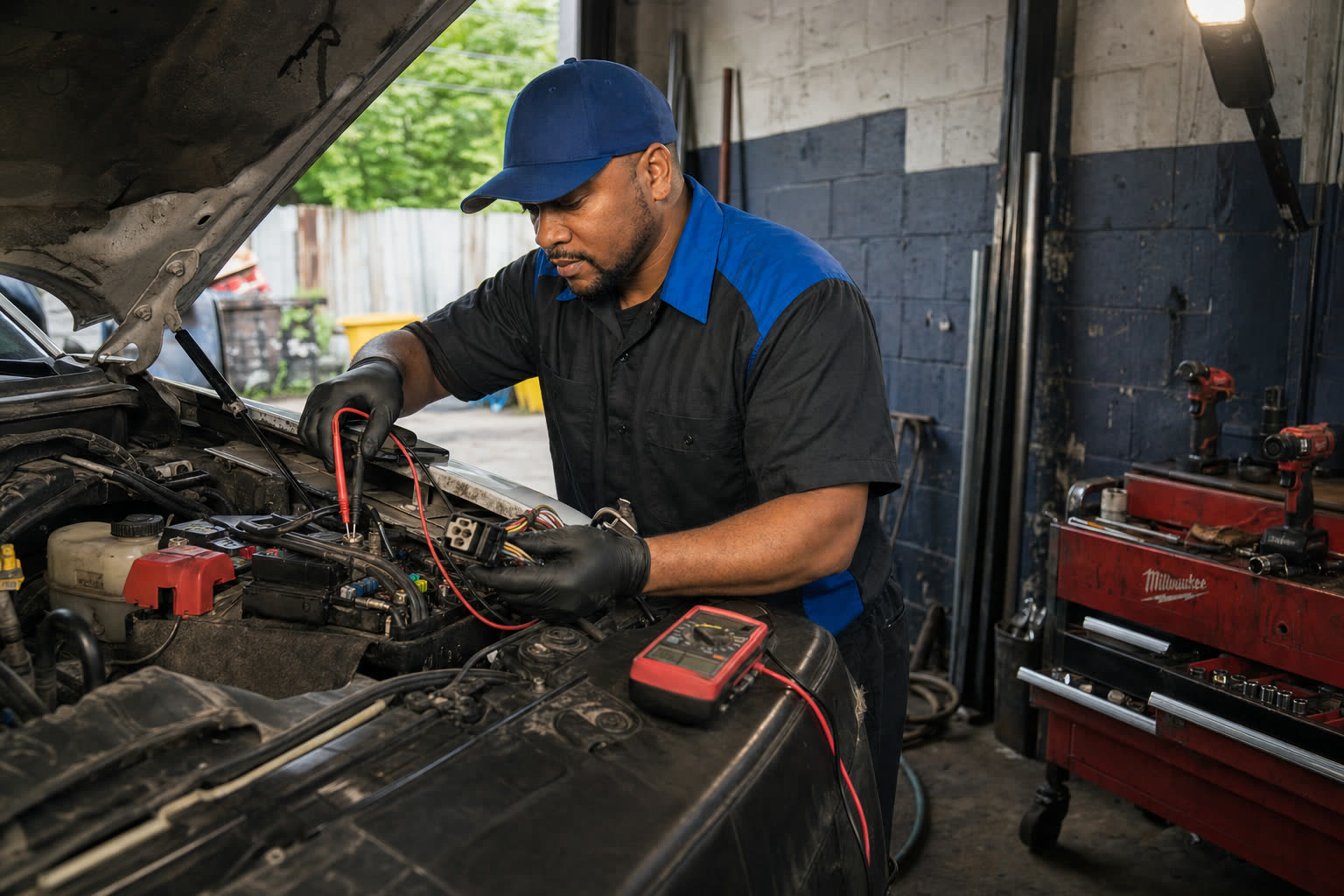
- Warm air can also come from a failing compressor, a bad cooling fan, an electrical fault or a stuck blend door.
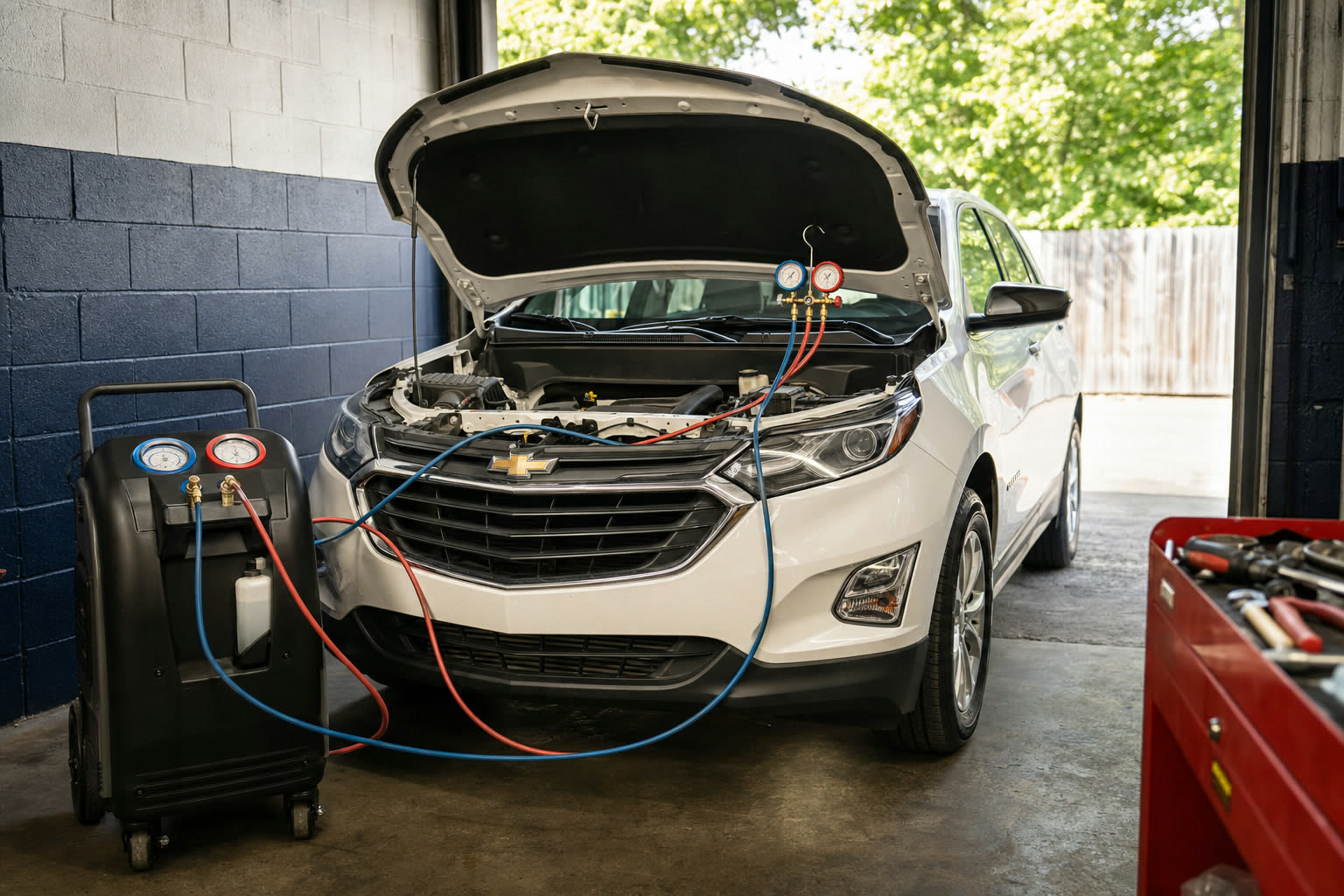
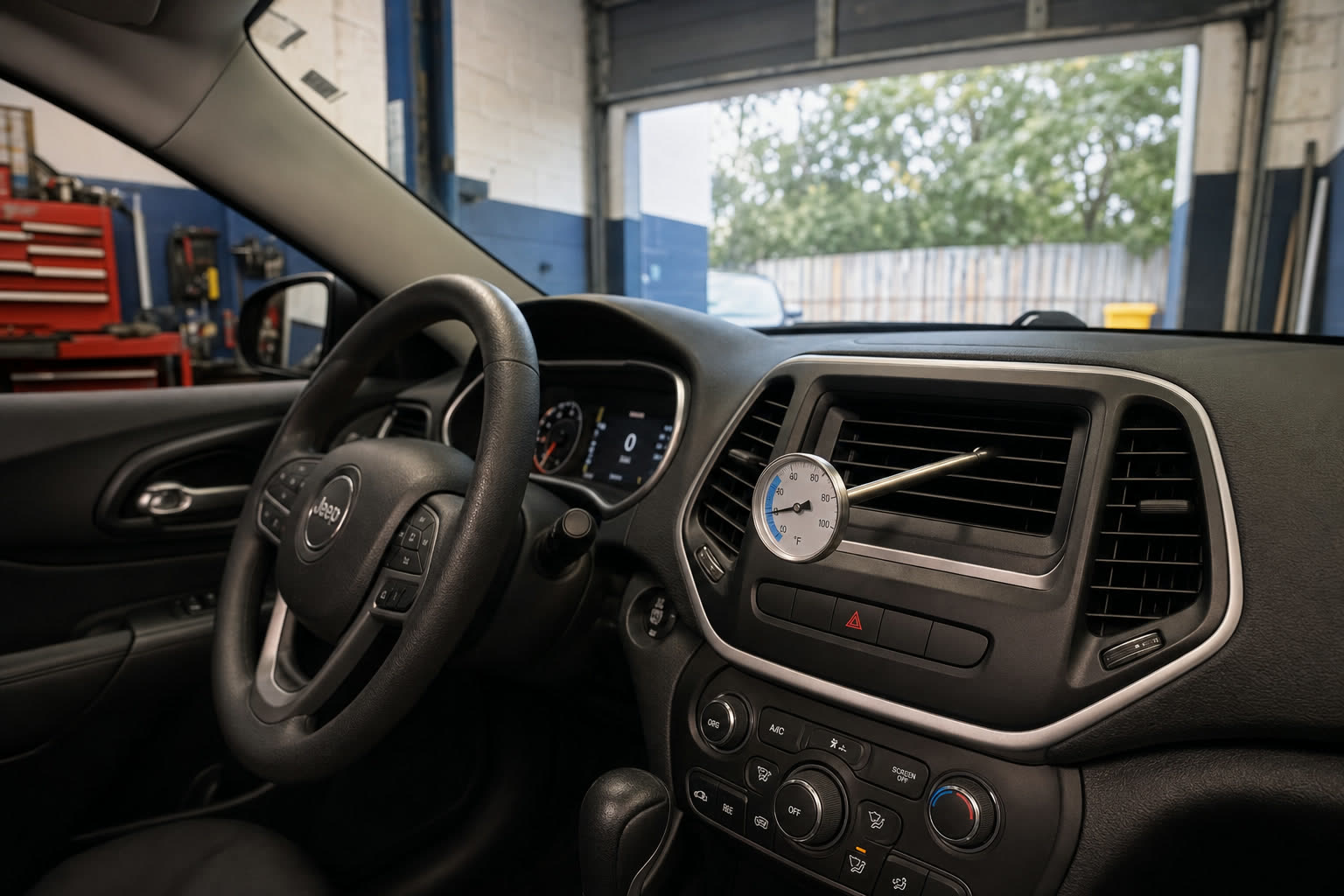
- Measuring vent temperature and checking pressures shows what is really going on.
It is a sticky July afternoon. You get in the car, crank the A/C to max, and wait for that first blast of cold. It never comes. The air is cool at best, warm at worst, and you are sweating before you leave the parking lot. If you have been searching for car AC repair Detroit shops, you have probably also heard that a quick recharge will fix it. Sometimes it helps. But a lot of the time, the cold air fades again in a few weeks. Here is why that happens and what actually fixes it.
How Your Car A/C Works, in Plain English
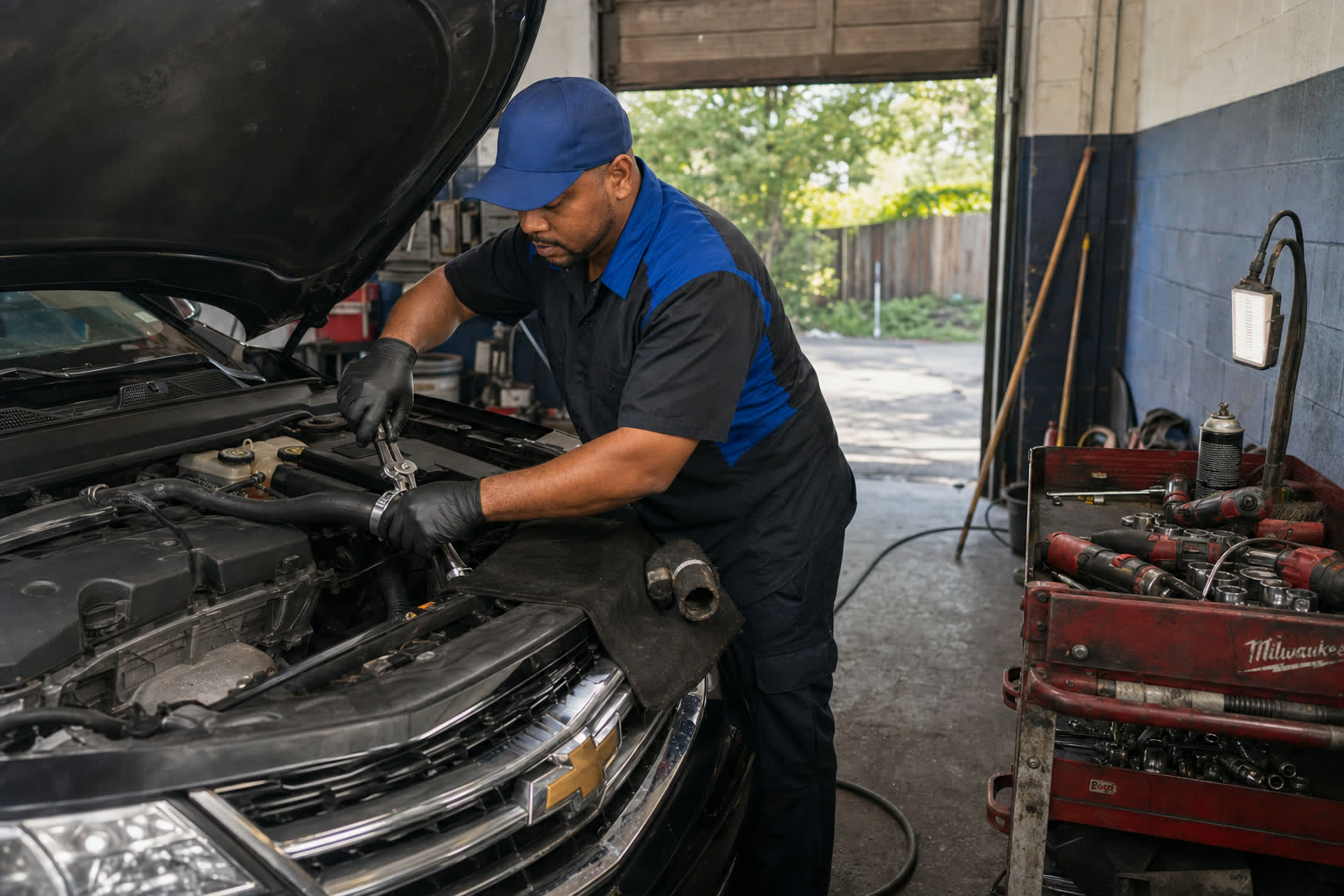
Your A/C does not make cold air. It moves heat out of the cabin. A compressor, driven by the engine, pumps a refrigerant through a closed loop. The refrigerant soaks up heat inside the car and then gives it off through the condenser, which sits in front of the radiator. A fan pulls air through the condenser to carry that heat away.
The key word is closed. The refrigerant is not supposed to get used up like gas or oil. If the system is low, it almost always means some of it leaked out. That is the whole reason a recharge by itself is often a short-term fix.
Why Your A/C Is Blowing Warm Air
There are a handful of common causes. Some are simple. Some take more work to find.
- Low refrigerant from a leak. Hoses, seals, O-rings, the condenser and the compressor can all leak. Many leaks are slow, so the A/C loses its cold a little at a time.
- A failing compressor. If the compressor or its clutch is not engaging, refrigerant is not moving and the air stays warm.
- A cooling fan that is not working. Without airflow across the condenser, the system cannot get rid of heat. You may notice the A/C is fine on the highway but warm in traffic.
- An electrical problem. A blown fuse, a bad relay, a pressure switch or a wiring fault can keep the compressor from turning on.
- A blend door problem. A small door behind the dash mixes hot and cold air. If it sticks on the heat side, you get warm air even when the A/C is working.
- A blocked condenser. Bugs, leaves and road dirt can clog the front of the condenser and cut its ability to shed heat.
Why a Recharge Alone May Not Last
Adding refrigerant to a leaking system is a bit like pumping up a tire with a nail in it. It works for a while. Then you are back where you started. The leak does not go away because the system is full again. It just has more to lose.
There is another catch. Too much refrigerant can be as bad as too little. Overfilling can raise pressures and make the A/C cool worse, not better, and it puts extra strain on the compressor. That is why the amount should be measured, not guessed. And if the real problem is a fan, a switch or a blend door, a recharge will not change a thing.
Detroit summers make all of this easy to notice. The average July high here is 84 degrees, and the air is humid. Humid air takes more work to cool, so a system that is a little weak can feel really weak on the worst days. Heat is also hard on other parts under the hood, so a weak A/C is a good reason to have the whole front of the car looked at.
Signs your A/C needs more than a recharge
- You had it recharged before and it got warm again
- Cold on the highway, warm when you are stopped
- A clicking, rattling or grinding noise when the A/C turns on
- Air from one side of the dash is colder than the other
- A musty smell when the air first comes on
- Weak airflow from the vents even on high
A grinding or loud noise when the A/C kicks on, or a burning smell. Turn the A/C off and have it checked so a failing part does not take other parts with it.
A/C that is slowly losing its cold, or needed a recharge before and is fading again. That points to a leak that should be found.
A slight musty smell or airflow that is a bit weaker than it used to be. Often a cabin air filter we can check at your next visit.
Car AC Repair in Detroit You Can Trust
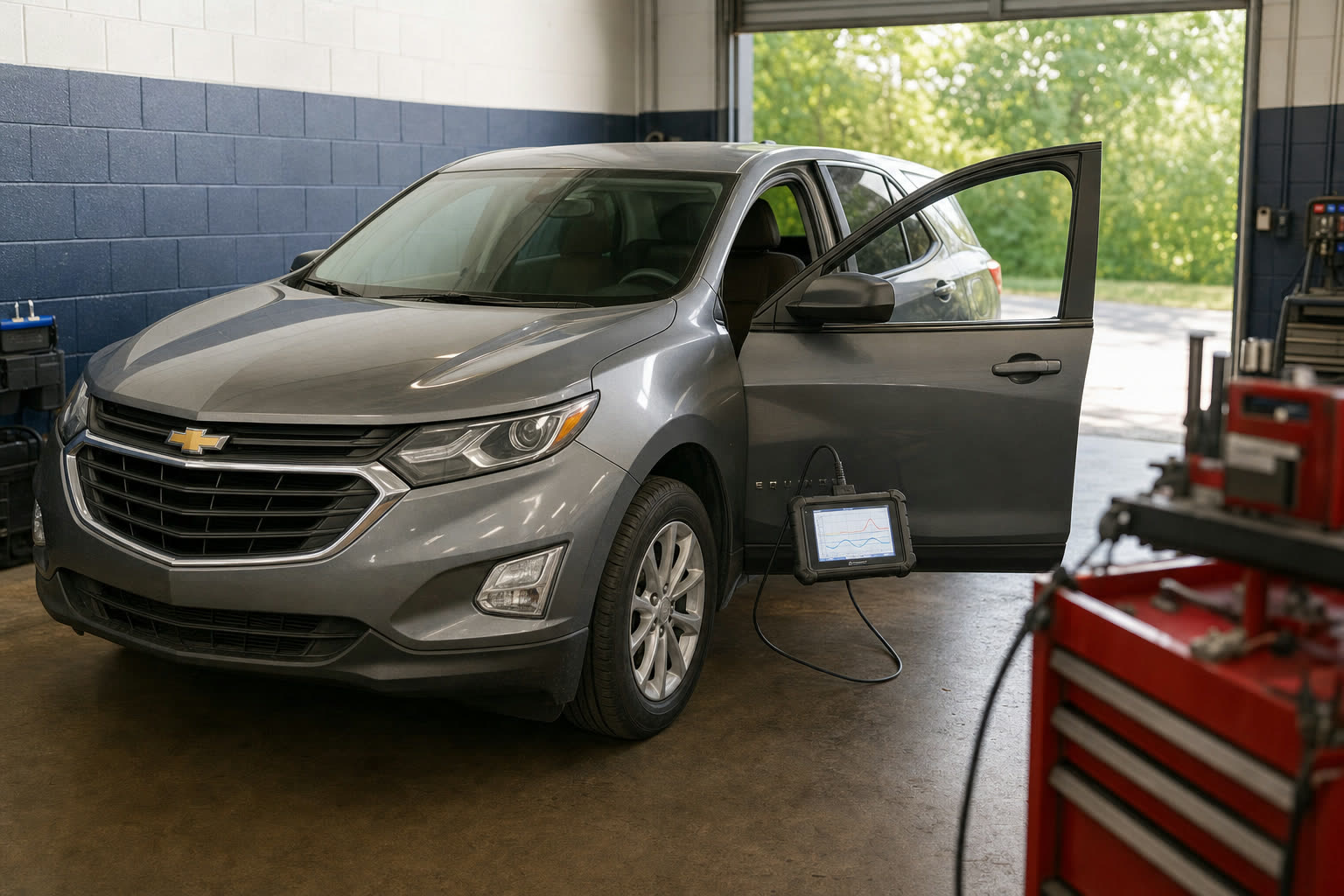
At Tees Auto Repairs, we start by measuring what is actually coming out of the vents. Then we put gauges on the system to see if refrigerant is low and whether the pressures make sense. If the numbers point to a leak, we look for it. If they point to a compressor, a fan, an electrical fault or a blend door, we check that instead.
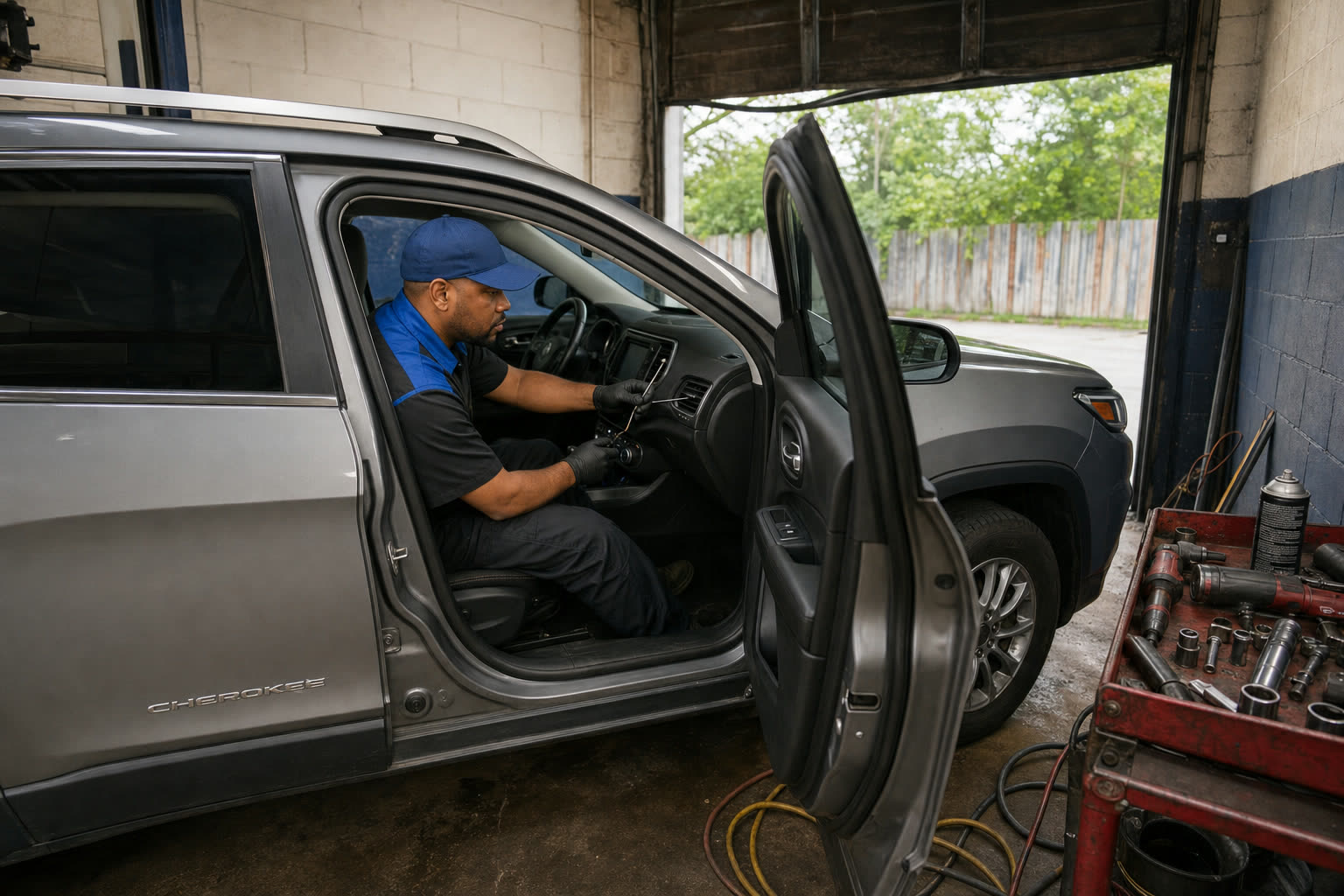
Once we know the cause, we explain it plainly and give you your options. If a recharge makes sense, we will say so. If the system has a leak, we tell you where it is and what it takes to fix, so you are not paying to recharge a leak over and over. After the repair, we recharge to the right amount and confirm the air is cold. You can see more on our A/C and heating repair page.
We help drivers from Paveway, Plymouth-I96 and North Rosedale Park, plus plenty of folks who come down Grand River Ave or over from Wyoming St. Whether it is a family trip to Stoepel Park No. 2 or a quick run past Mallett Park, nobody wants to sit in a hot car in August.
Tips to Keep Your A/C Working Longer
- Run the A/C for a few minutes every couple of weeks, even in winter. The defrost setting often does this for you. It helps keep seals from drying out.
- Park in the shade or use a sunshade so the system has less heat to fight.
- Crack the windows for a minute when you first get in to let the hottest air out.
- Keep the front of the car clear of leaves and debris so air can reach the condenser.
- Replace the cabin air filter when it is dirty to keep airflow strong.
- If the engine temperature gauge also runs high, mention it. The A/C and cooling system share airflow and fans.
The Bottom Line
Warm air from the vents is your A/C telling you something changed. Low refrigerant usually means a leak. A recharge can bring the cold back, but without fixing the cause, it often fades again. The smart move is to test first, find the real problem, and fix that. If your A/C is not keeping up with a Detroit summer, reach out and we will give you a straight answer.
Questions Detroit drivers ask
Common causes are low refrigerant from a leak, a failing compressor, a cooling fan that is not working, or an electrical problem. We test the system so you are not just recharging a leak over and over.
It can if the system is only a little low and has no real leak. But refrigerant does not get used up, so low levels usually mean a leak. If that leak is not fixed, the cold air often fades again.
That often points to a cooling fan problem or a blocked condenser. At highway speed, air rushes through on its own. In traffic, the fan has to do that job.
Tees Auto Repairs at 9373 Hubbell Ave serves drivers across Detroit’s west side, including Paveway, Plymouth-I96, North Rosedale Park, Plymouth-Hubbell, Aviation Sub, Joy Community, Franklin Park and Weatherby, plus nearby Dearborn, Dearborn Heights, Redford Township and Livonia. Call or text (313) 370-8603.