- Late February through early April is usually the worst stretch of pothole season in Metro Detroit.
- A clunk, a pull, a bouncy ride or uneven tire wear after a hard hit are signs to get the suspension checked.
- Loose steering parts like ball joints and tie rods come first because they affect control.
- Not every pothole causes damage. If the car drives the same as before, it may only need to be watched.
You see it too late. The front tire drops into a hole, the whole car jolts, and something under you makes a sound you did not like. For the rest of the drive you are listening for trouble. If that sounds familiar, you are not alone. Every spring, drivers start looking for suspension repair Detroit shops after a rough few weeks on the roads. Some hits do real damage. Many do not. This post will help you tell the difference and decide what to do next without guessing.
Why Pothole Season Hits Detroit So Hard
Potholes start with water. It seeps into cracks in the asphalt, freezes, expands, and then thaws. That cycle breaks the road apart from the inside. Metro Detroit has clay-heavy soil that holds onto moisture, so the water has nowhere to go. And our winter temperatures often swing between about 15 and 45 degrees within a few days, which speeds the whole thing up.
That is why late February through early April is usually the worst stretch. Drivers on Joy Rd, Greenfield Rd and the ramps onto I-96 know the feeling. The holes show up fast, fill with water and are hard to see, especially at night.
What a Pothole Actually Does to Your Car
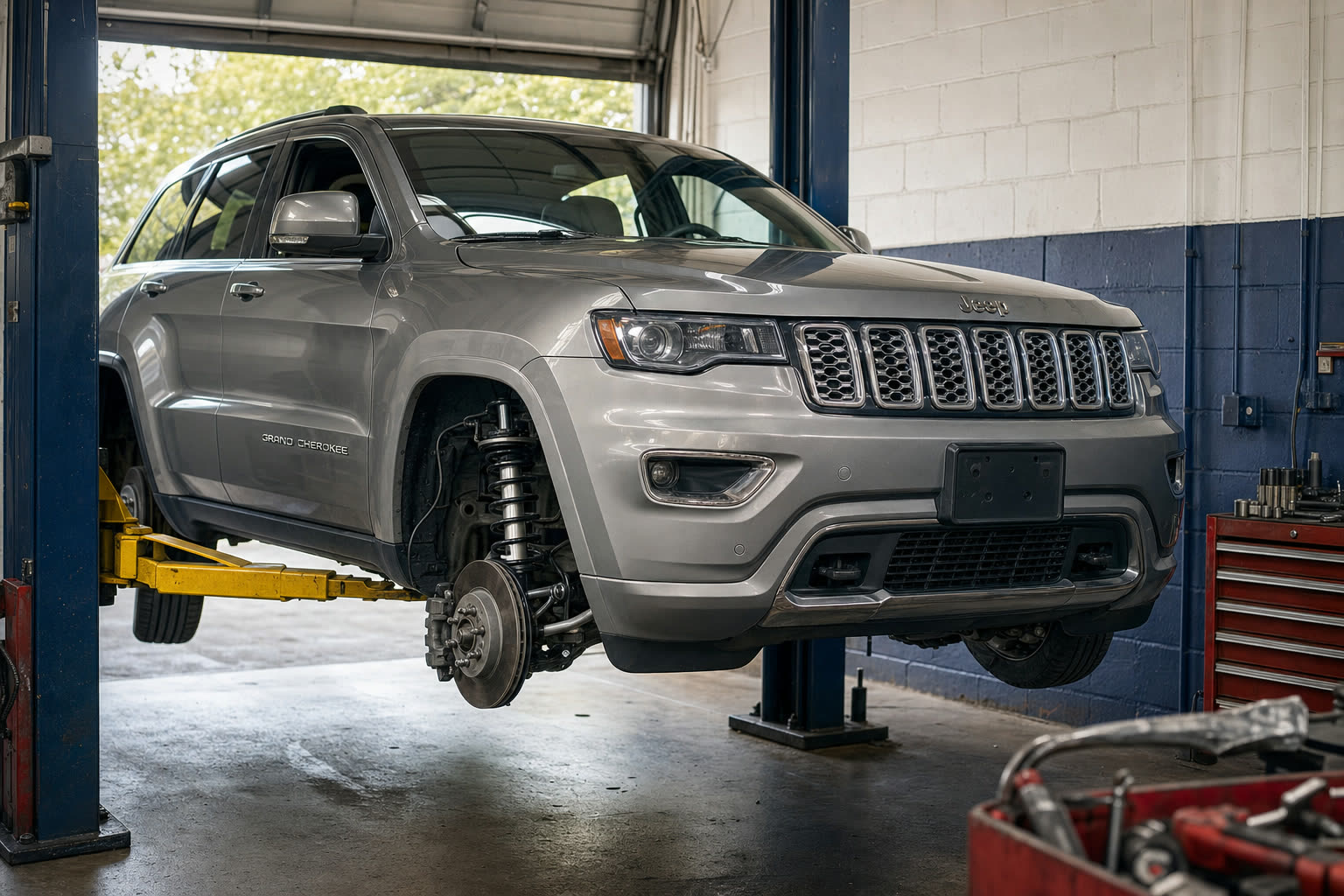
Your suspension is the set of parts that holds the wheels to the car and keeps the tires on the road. It includes struts or shocks, control arms, ball joints, tie rods, sway bar links and a lot of rubber bushings. It is built to soak up bumps. A deep pothole at speed can be more than it was built for.
A hard hit can bend a control arm or tie rod just enough to throw off the alignment. It can knock a strut loose or start a leak. It can crack a worn bushing or loosen a ball joint that was already on its way out. Tires and rims take a beating too. Sometimes one pothole does the damage. More often, a season of smaller hits wears parts out faster than normal.
Here is the part most people do not expect. Suspension damage does not always show up right away. A bent part might feel fine around town and only show itself at highway speed. A strut that started leaking in March might not feel bouncy until June. Tire wear from a bad alignment can take months to spot. That is why it helps to notice small changes in the weeks after a rough stretch of road, not just the minute after the hit.
Why it matters beyond comfort
A rough ride is annoying, but the bigger reasons to fix suspension problems are safety and money. Worn parts can make the car harder to control in a sudden stop or a quick lane change. They also chew through tires. Catching a worn link or a bad alignment early can save a set of tires that would otherwise wear out long before they should.

Signs of Pothole Suspension Damage
After a hard hit, pay attention for the next few days. These are the signs worth a call:
- A clunk or knock over bumps that was not there before
- The steering wheel is off center when you drive straight
- The car pulls or drifts to one side
- The ride feels bouncy or floaty, or the nose dives when you brake
- One corner of the car sits lower than the others
- A vibration in the steering wheel at highway speed
- Tires wearing faster on the inside or outside edge
- A bulge on the side of a tire or a bent rim
A bulge in a tire sidewall is worth taking seriously. It means the inside of the tire was damaged, and it should be looked at before any long drive.
A loose ball joint or tie rod, a bulge in a tire, or steering that feels loose or wanders. These affect control of the car, so they come first.
A leaking or worn strut, a bouncy ride, or an alignment that is off and wearing your tires. Plan for it before the damage spreads to new tires.
Rubber bushings that are just starting to crack, or a car that feels the same as it did before the hit. We note it and check again next visit.
Suspension Repair in Detroit You Can Count On
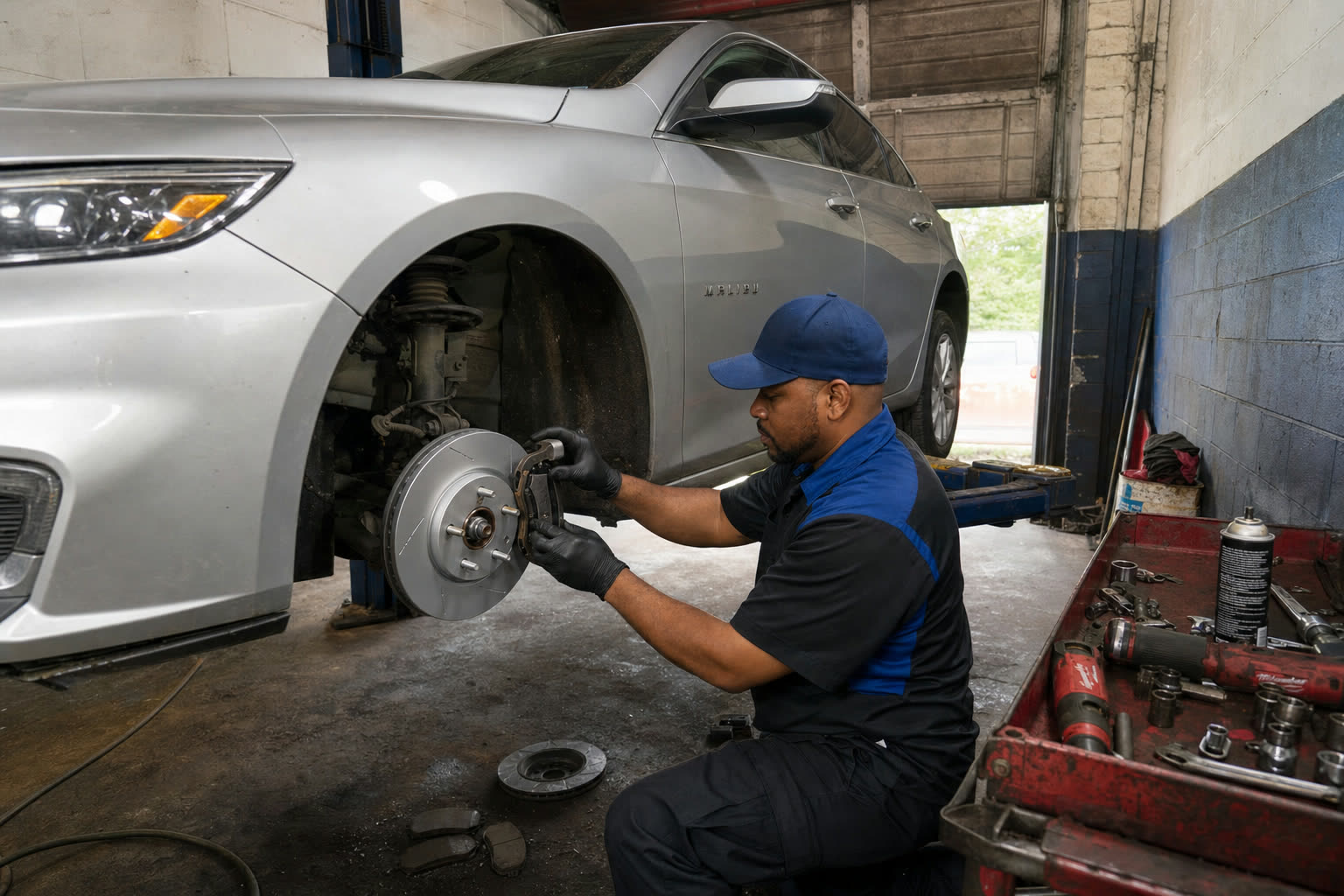
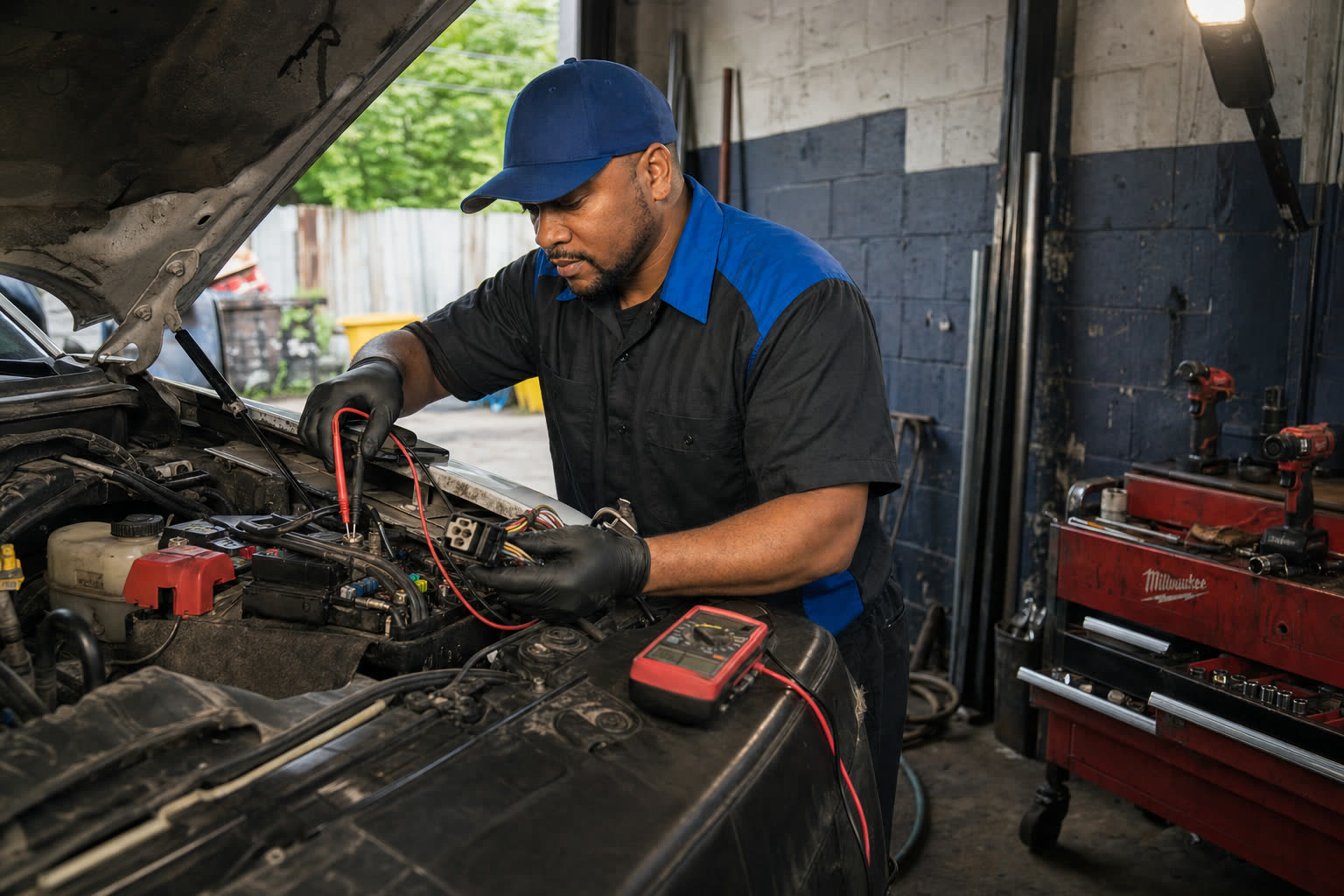
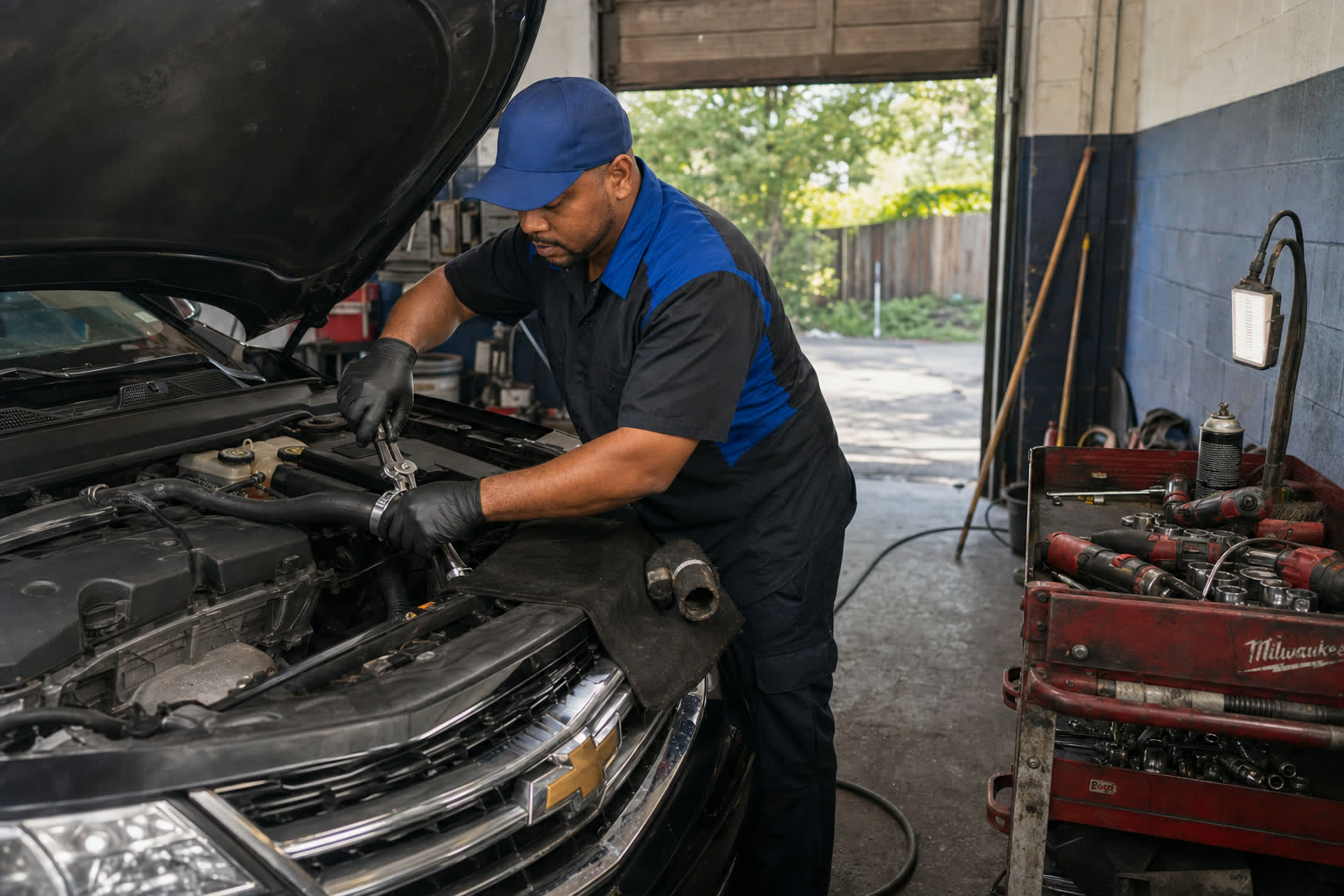
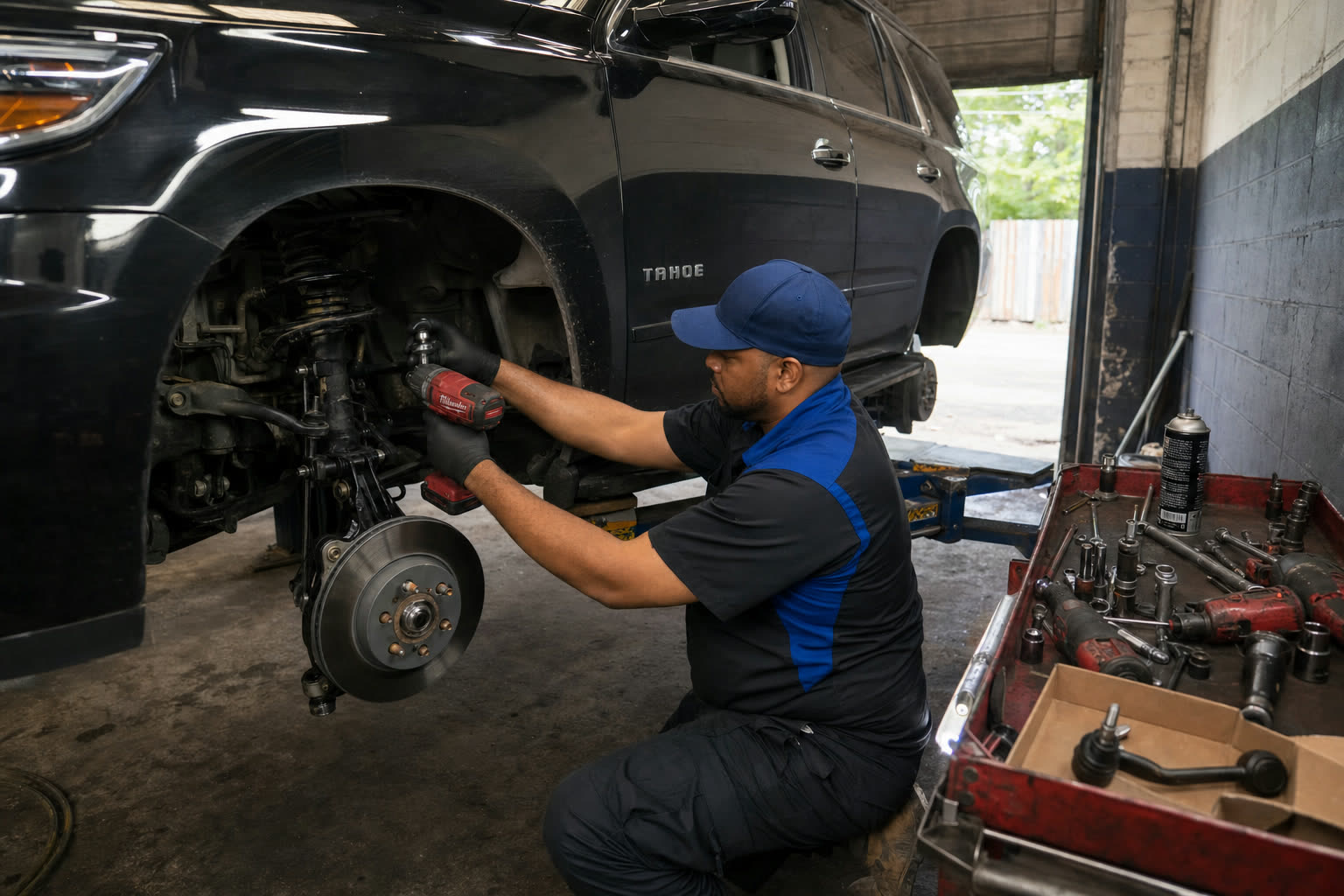
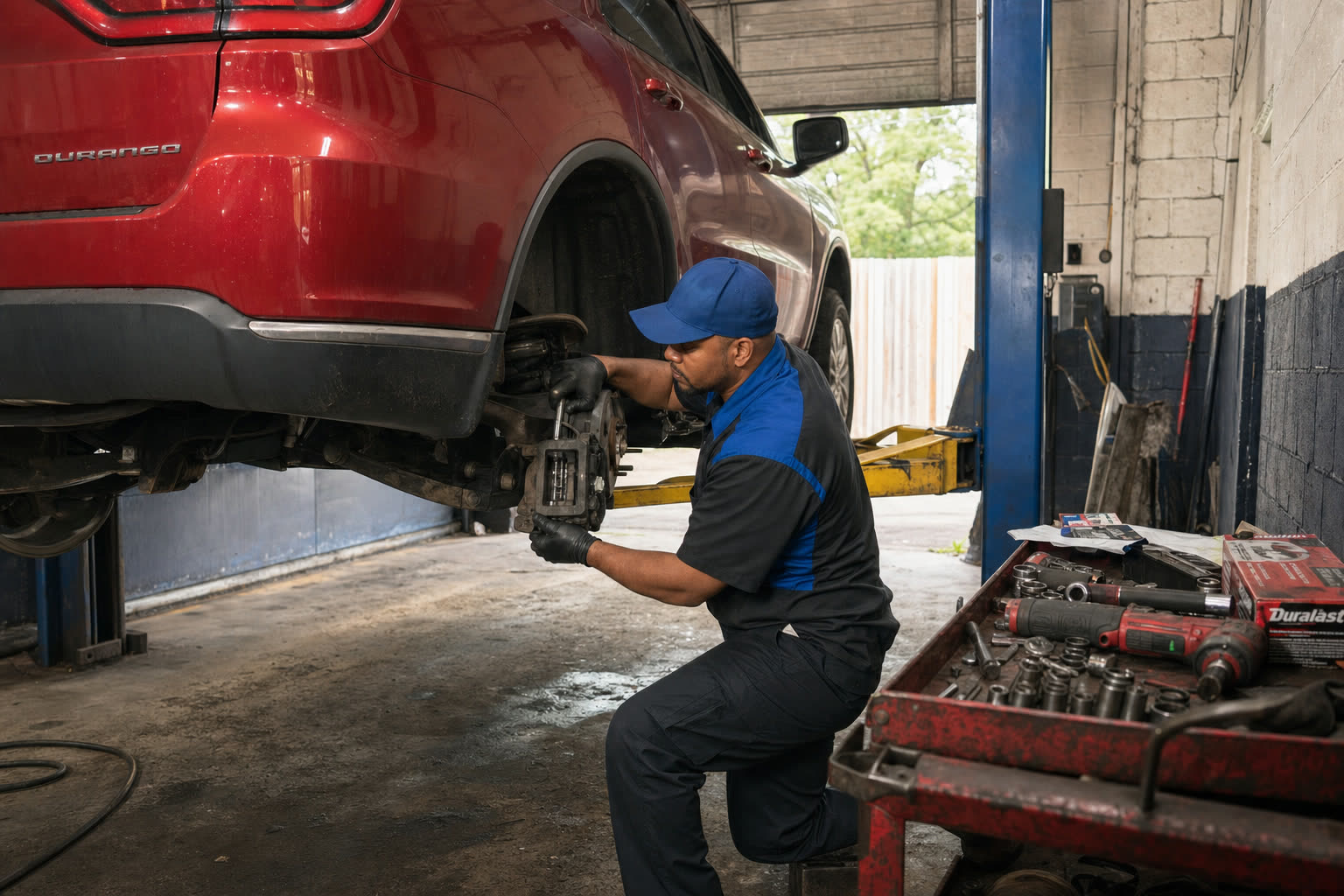
At Tees Auto Repairs, suspension work starts on the road. We drive the car over bumps so we hear and feel the same thing you do. Then it goes up on the lift, where we check struts, shocks, control arms, ball joints, tie rods and sway bar links one at a time.
Then we show you what we found. If one sway bar link is worn, you replace one link, not the whole front end. If a strut is leaking but the others are fine, we tell you that too. We will also let you know if the repair means you should get an alignment. You can learn more on our suspension repair page.
We also look past the part that is making noise. If a pothole bent a wheel, it may have hit the tire and the brakes on that corner too. If one side of the car is worn, the other side is worth a look. You get one clear picture of the car, sorted by what matters most, so you can plan your repairs around your budget instead of being surprised later.
We see a lot of drivers from Grandmont, Rosedale Park and Joy Community each spring. Whether you drive past Stoepel Park No. 2 on W. Chicago or drop kids off at Henderson Academy, those daily miles add up on your suspension.
Tips to Get Through Pothole Season
- Leave more room behind the car ahead so you can see holes sooner.
- Slow down before a pothole, not in it. Braking hard in the hole puts more force on the front suspension.
- Be extra careful around puddles. A puddle can hide a deep hole.
- Keep tires at the right pressure. Low tires give less protection to your rims and suspension.
- After a hard hit, check your tires for bulges and notice if the steering wheel is still straight.
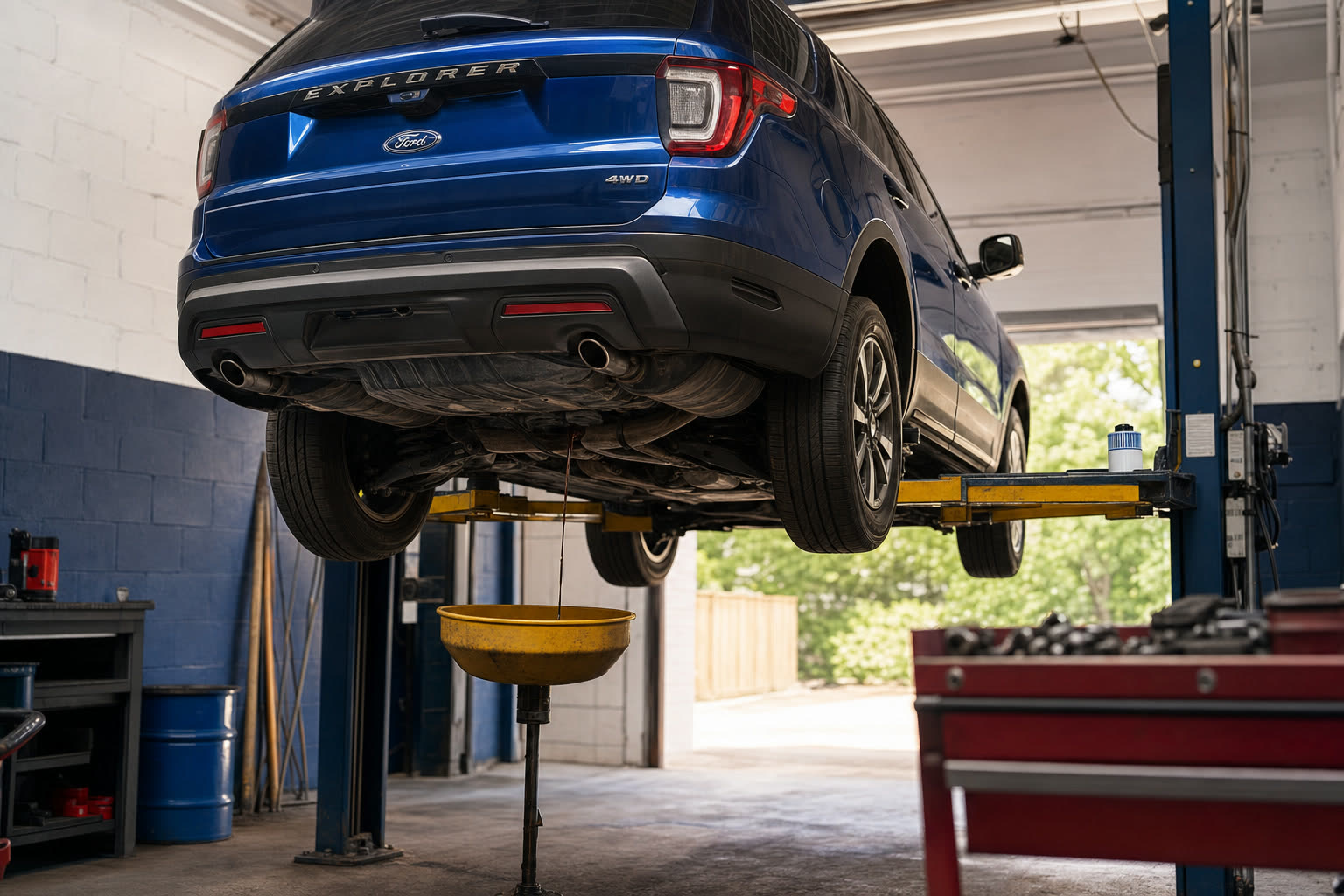
- Mention any new noise at your next oil change, when the car is already in the shop.
The Bottom Line
Potholes are part of driving in Detroit, especially in early spring. One hard hit does not always mean damage. But if the car clunks, pulls, bounces or wears tires unevenly, it is telling you something changed. Loose steering parts are now. Worn struts are soon. Cracked bushings are usually monitor. When you are not sure, get in touch and we will take a look and tell you straight.
Questions Detroit drivers ask
Yes, a deep hole at speed can bend or loosen parts like tie rods, ball joints and control arms. Often it is a whole season of hits that wears parts out. If the car feels different after a hard hit, have it checked.
Not always. If the steering wheel is off center, the car pulls, or tires start wearing unevenly, the alignment may be off. We check the suspension parts first so a bent part does not throw the new alignment off again.
It depends on what is causing it. A worn sway bar link is less urgent than a loose ball joint or tie rod. Call the shop, describe the noise, and we will tell you how soon to bring it in.
Tees Auto Repairs at 9373 Hubbell Ave serves drivers across Detroit’s west side, including Grandmont, Rosedale Park, Joy Community, Fiskhorn, Plymouth-I96, Garden View, Weatherby and North Rosedale Park, plus nearby Dearborn, Dearborn Heights, Redford Township and Livonia. Call or text (313) 370-8603.