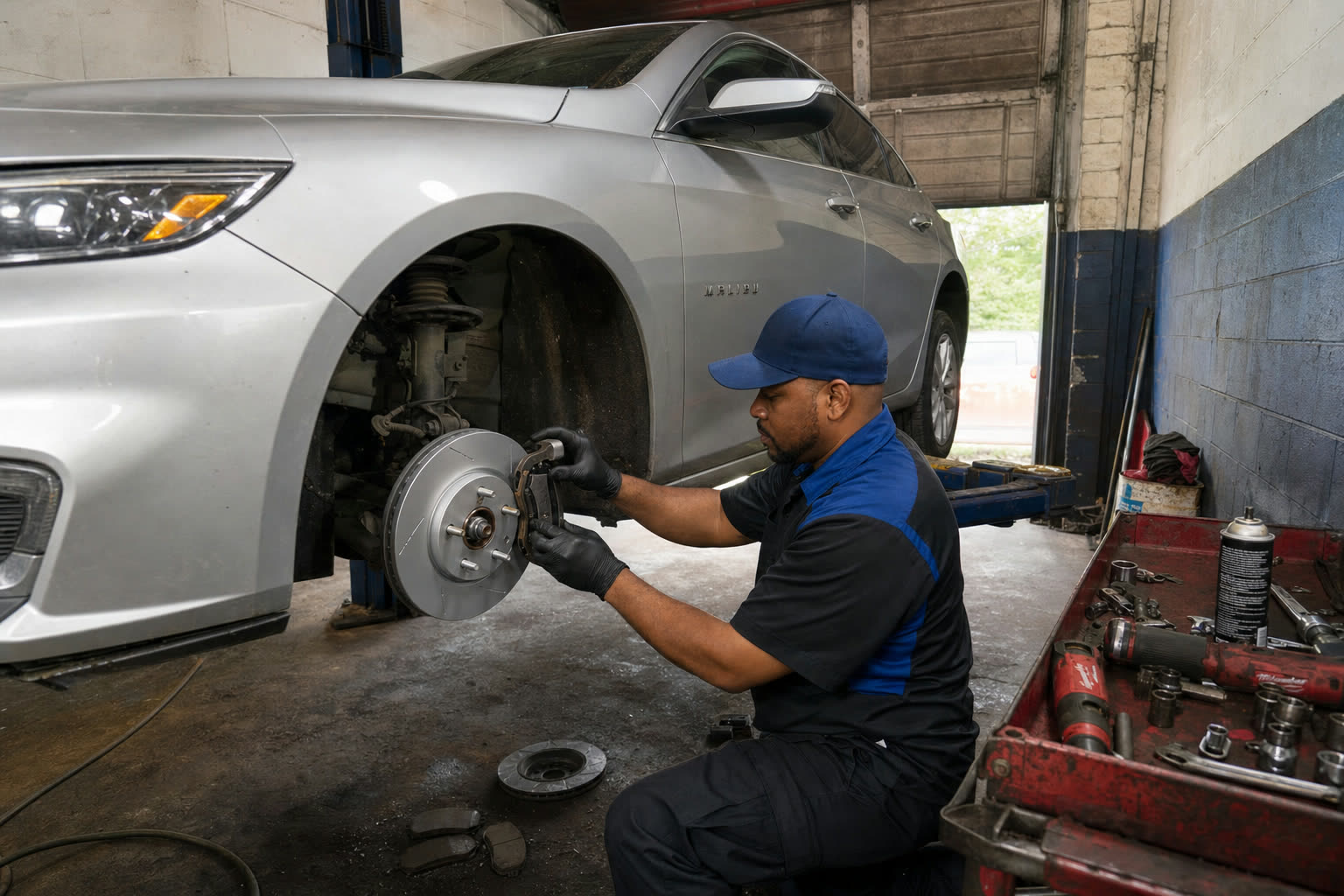
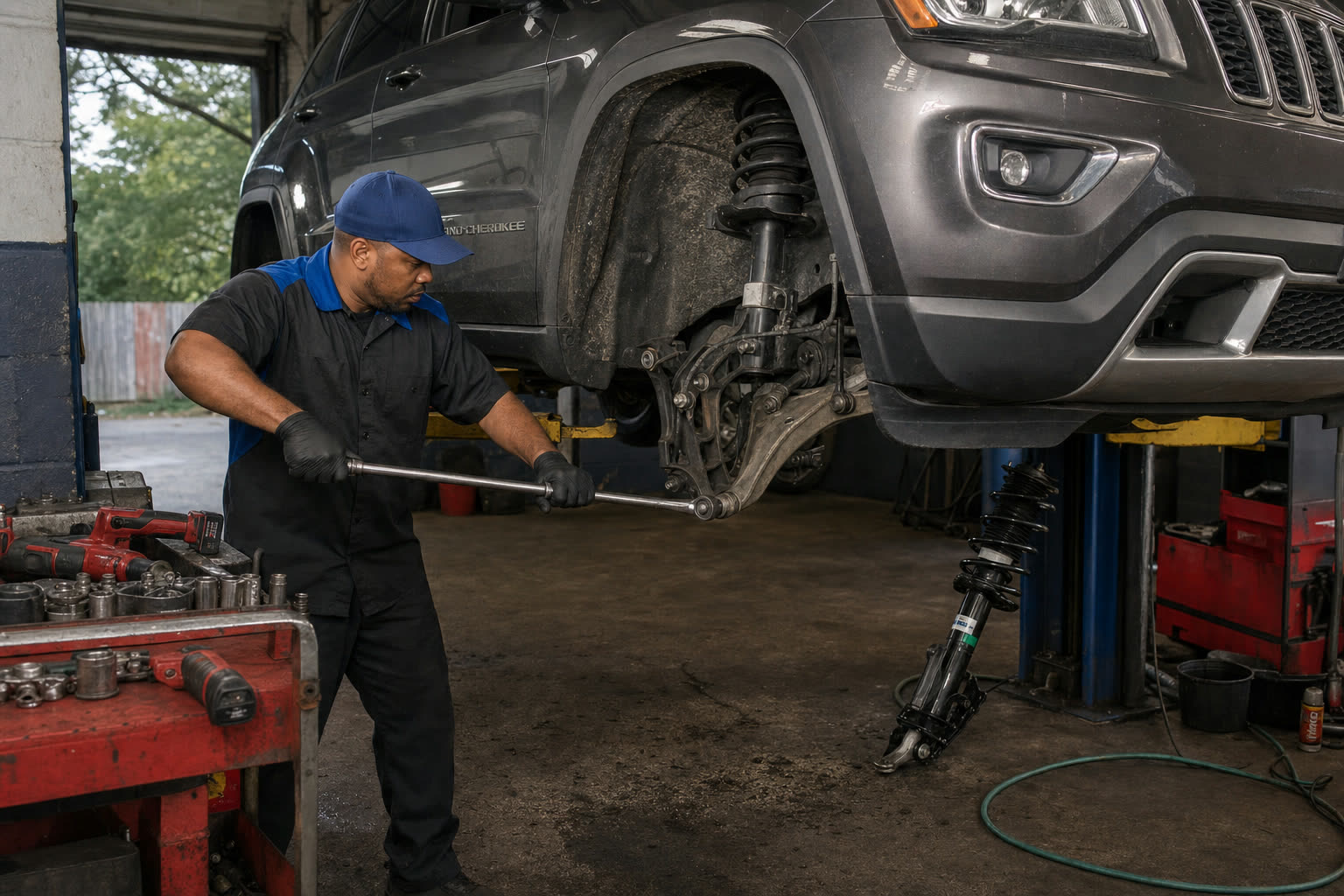
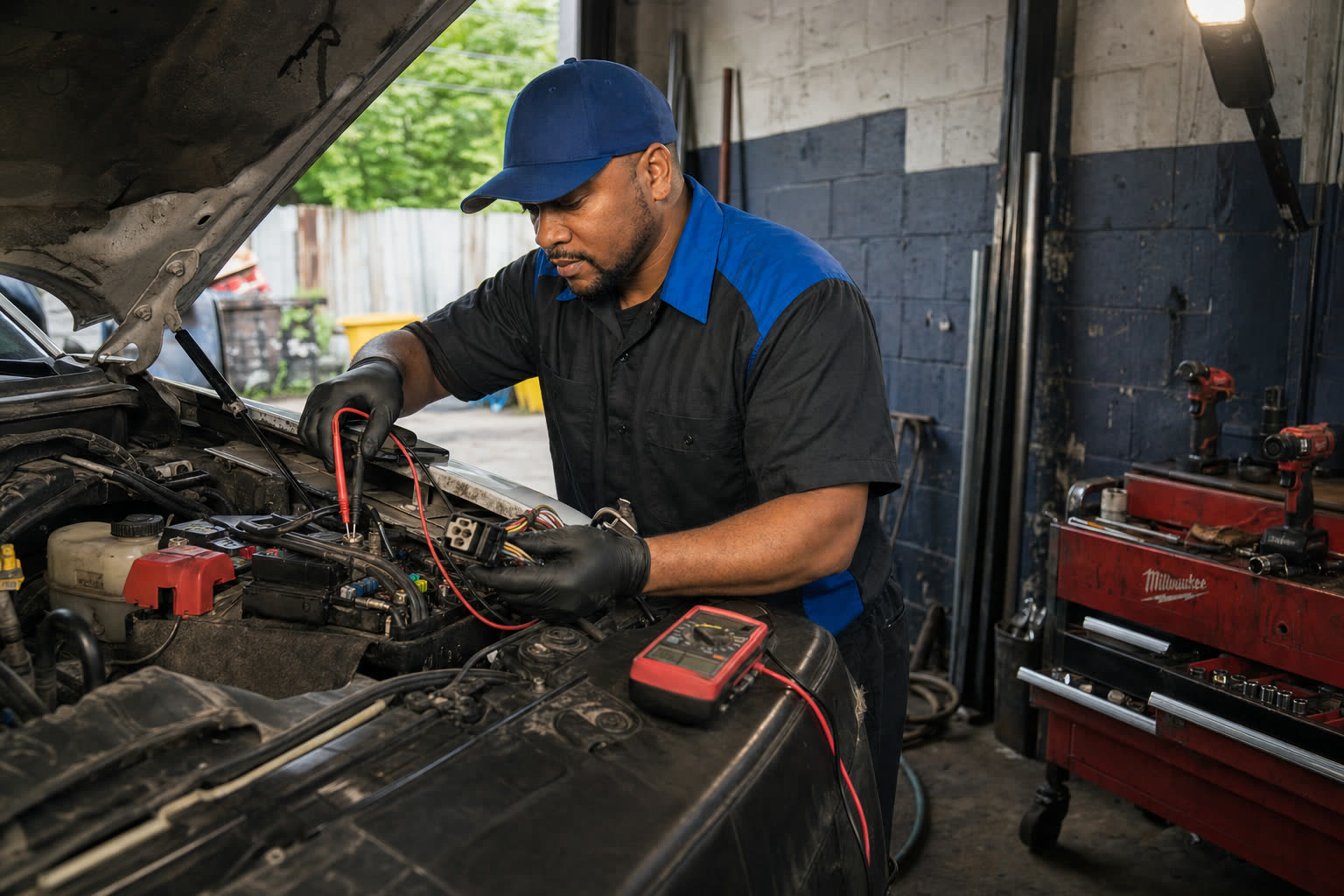
- If the gauge hits red or you see steam, pull over safely and turn the engine off.
- Never open a hot radiator cap. The coolant inside is under pressure.
- Common causes are low coolant from a leak, a stuck thermostat, a bad water pump or a cooling fan that is not working.
- Adding coolant can get you to the shop, but the leak or failed part still needs to be found.
You are sitting in traffic on a hot afternoon. The A/C is on, the radio is up, and then you notice the temperature needle creeping past the middle. Maybe it keeps going. Maybe you see a wisp of steam at the edge of the hood. That sinking feeling is real. If you are dealing with a car overheating Detroit summer problem right now, take a breath. There is a right way to handle the next few minutes, and it can protect your engine. After that, the goal is finding out why it happened so it does not happen again.
What to Do When the Gauge Starts Climbing
Here is what to do, in order. Keep it simple and stay safe.
- Turn off the A/C. It adds load to the engine.
- Turn the heater on full hot with the fan on high. It feels awful in July, but it pulls heat away from the engine.
- If the needle keeps rising, find a safe place to pull over, like a side street or parking lot.
- Turn the engine off. Driving an engine that is overheating can damage it badly.
- Do not open the hood right away if you see steam. Give it time.
- Never open the radiator cap or coolant cap on a hot engine. The coolant is under pressure and can spray out.
- Once it cools, look for puddles under the car and check the coolant reservoir level if you can do it safely.
- Call a shop before you drive any farther.
If you are close to the shop and the engine has fully cooled, a short, gentle drive may be fine once the coolant is topped off. Call first and describe what happened. We will help you decide if driving it in is a good idea or if it should be towed.
Why Cars Overheat in a Detroit Summer
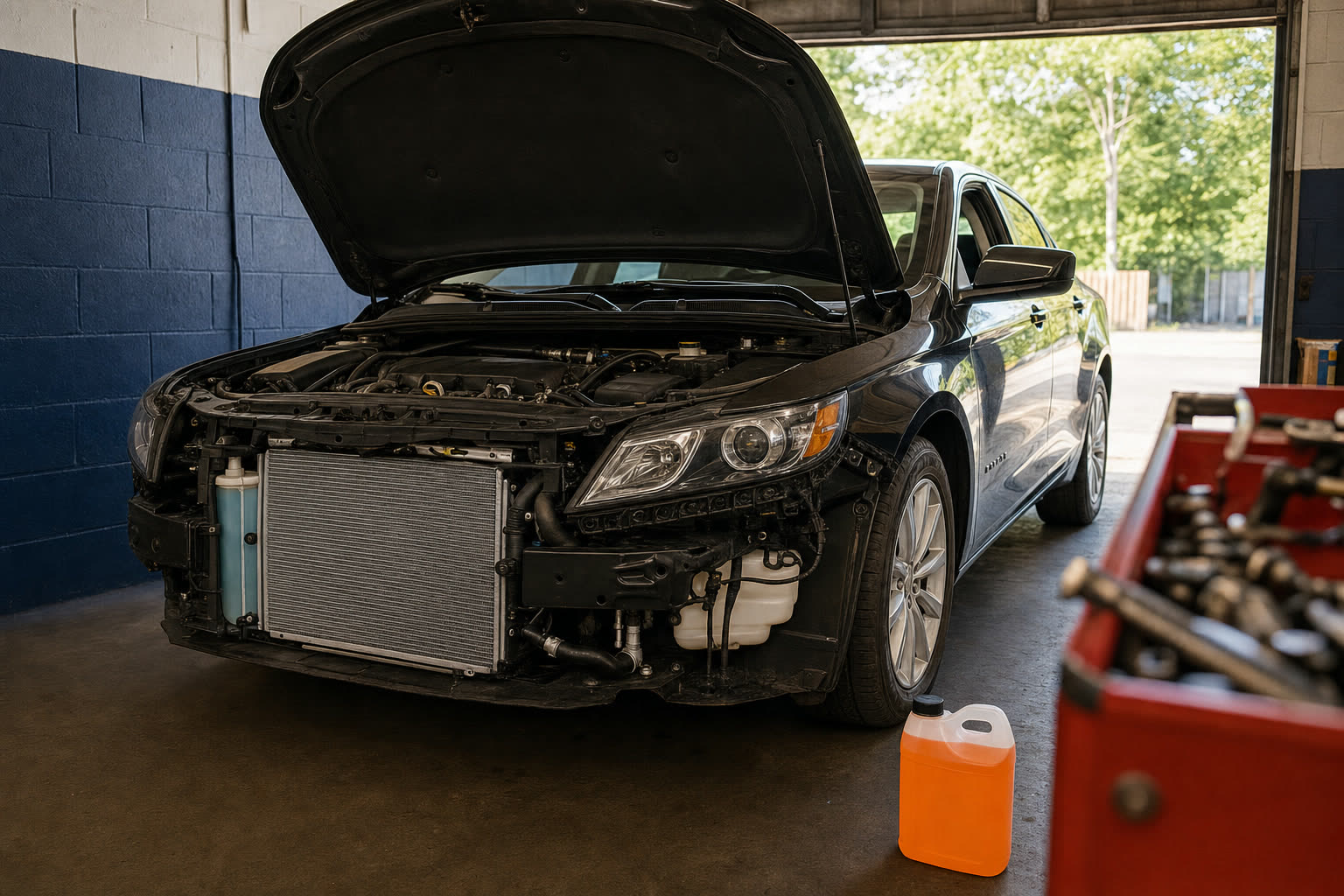
Your engine makes a lot of heat. The cooling system moves coolant through the engine, out to the radiator, and back again. Air flowing through the radiator carries that heat away. When any part of that loop stops doing its job, the temperature climbs.
Summer makes weak spots show up. In Detroit, the average July high is 84 degrees, and summers here are humid. Add slow traffic on W. Warren Ave or Tireman Ave, the A/C running full blast, and not much air moving through the radiator, and a cooling system that was barely keeping up in May can fall behind in July.
Car Overheating in Detroit: The Most Common Causes
- Low coolant from a leak. A cracked hose, a leaking radiator, a loose clamp or a worn water pump seal can slowly let coolant out.
- A stuck thermostat. The thermostat opens to let coolant flow. If it sticks closed, the coolant cannot reach the radiator.
- A failing water pump. The pump moves coolant around. If it wears out or leaks, flow slows down.
- A cooling fan that does not turn on. At low speeds and in traffic, the fan does the work of moving air. A bad fan motor, relay or sensor can stop it.
- A clogged radiator. Old coolant can leave buildup inside, and bugs and road dirt can block the outside.
- A bad radiator cap. The cap holds pressure in the system. A worn one can let coolant boil off.
Signs your cooling system needs attention
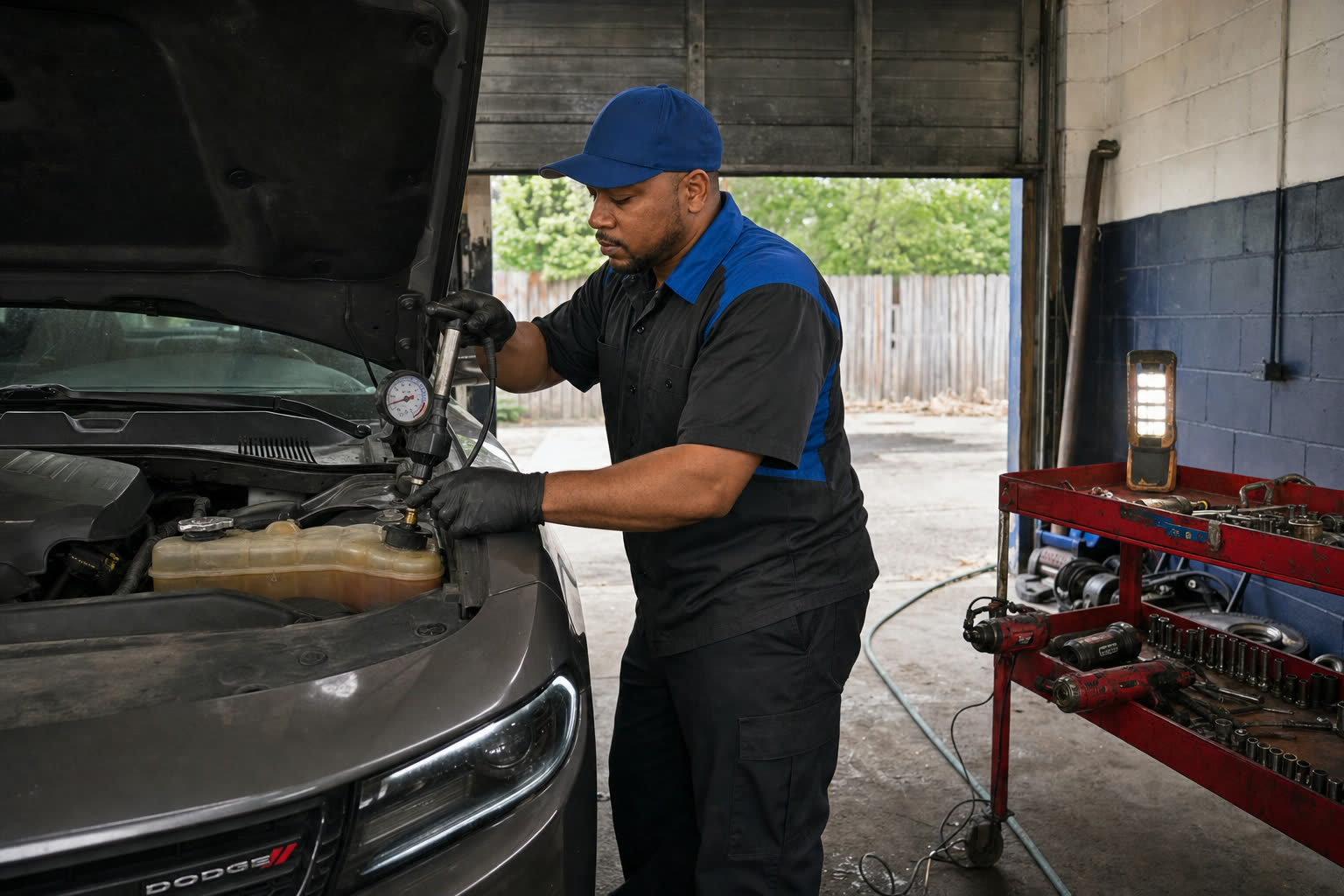
Overheating does not always come out of nowhere. Watch for these early clues:
- The gauge sits higher than it used to, especially in traffic
- Green, orange or pink puddles under the car
- A sweet smell after driving
- A low coolant warning light
- You keep having to add coolant
- The heater blows cold air even when the engine is warm
The gauge is in the red, you see steam, or the engine is overheating. Pull over, turn it off, and call before driving farther.
A slow coolant leak, a cracked or soft hose, or a gauge that runs hotter than normal in traffic. Get it checked before it turns into an overheat.
Coolant that is getting old but still at the right level with no leaks. We will let you know when it is due.
How Tees Finds the Real Cause
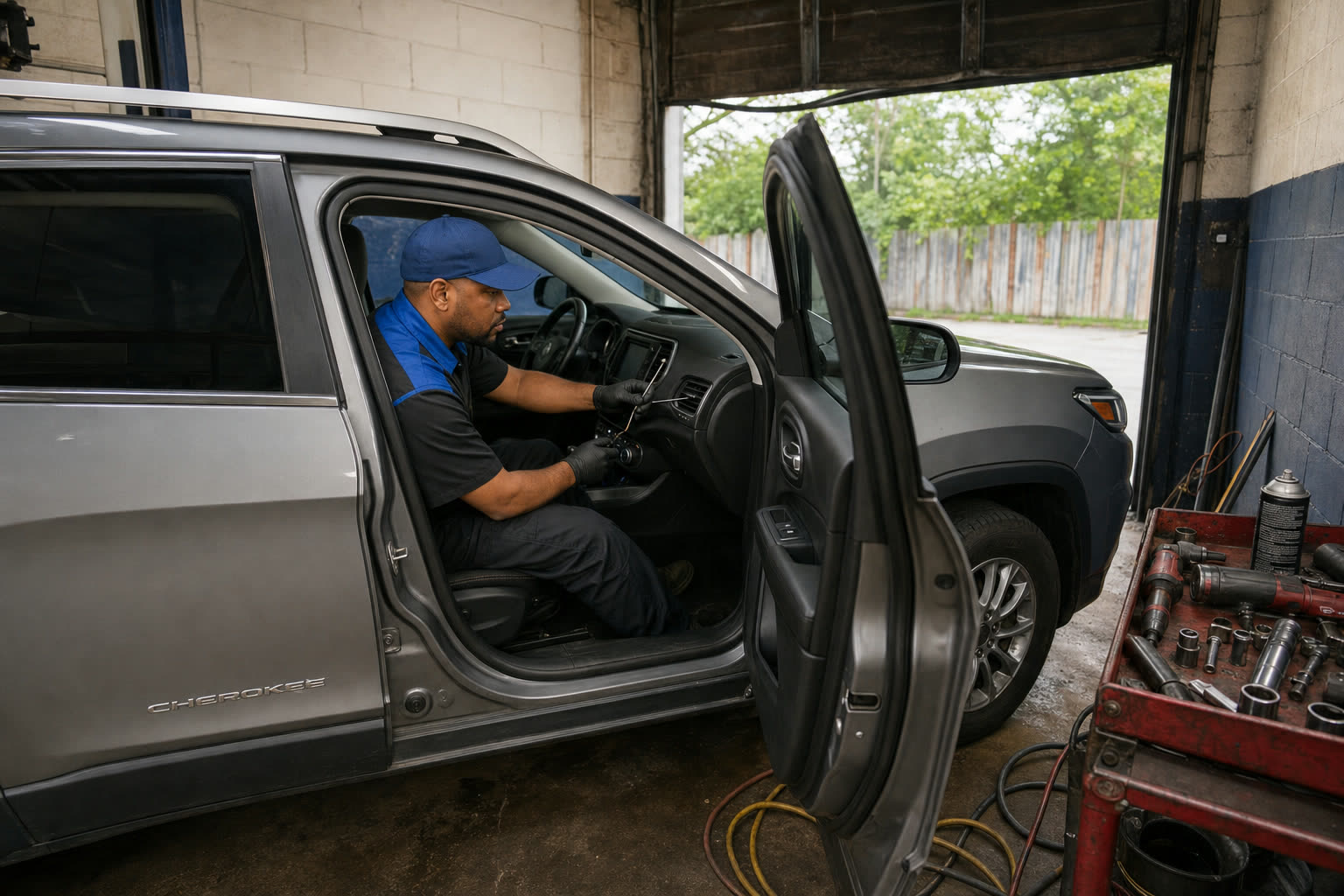
Adding coolant might get the needle back down for a day or two. But if coolant is leaving the system, it is going somewhere. At Tees Auto Repairs, we find out where. We pressurize the cooling system so even slow leaks show themselves. Then we check the radiator, hoses, water pump, thermostat and cooling fan one by one.
Once we know what failed, we explain it in plain English and tell you what it takes to fix it. If it is a cracked hose, you get a hose, not a whole new cooling system. After the repair, we refill the system, bleed out trapped air, and make sure it holds the right temperature. Learn more on our cooling system repair page.
We help drivers from Warren Ave Community, Garden View and Weatherby, along with folks heading south toward Ford Woods Park or west to Rouge Park on summer weekends. Those are exactly the kinds of trips where you want the temperature needle to stay right where it belongs.
Tips to Keep Your Car Cool This Summer
- Glance at the temperature gauge now and then, especially in slow traffic.
- Check the coolant reservoir when the engine is cold. It should sit between the marks.
- Look under the car where you park for fresh spots of colored fluid.
- Use the coolant type your owner’s manual calls for. Mixing types can cause problems.
- In an emergency, water can get you to the shop. After that, the system needs the right coolant mix.
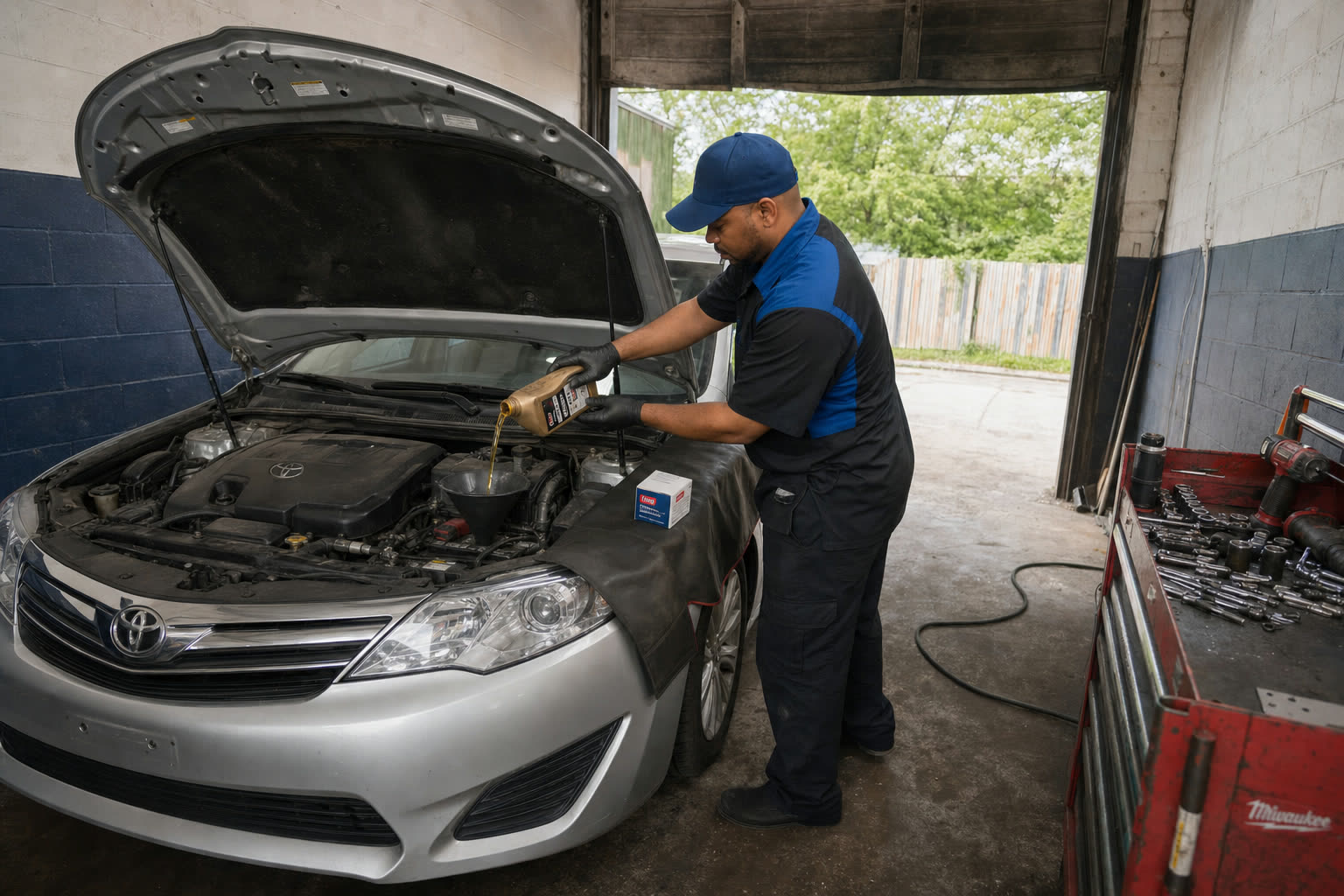
- Ask for a quick look at hoses and coolant at your next oil change.
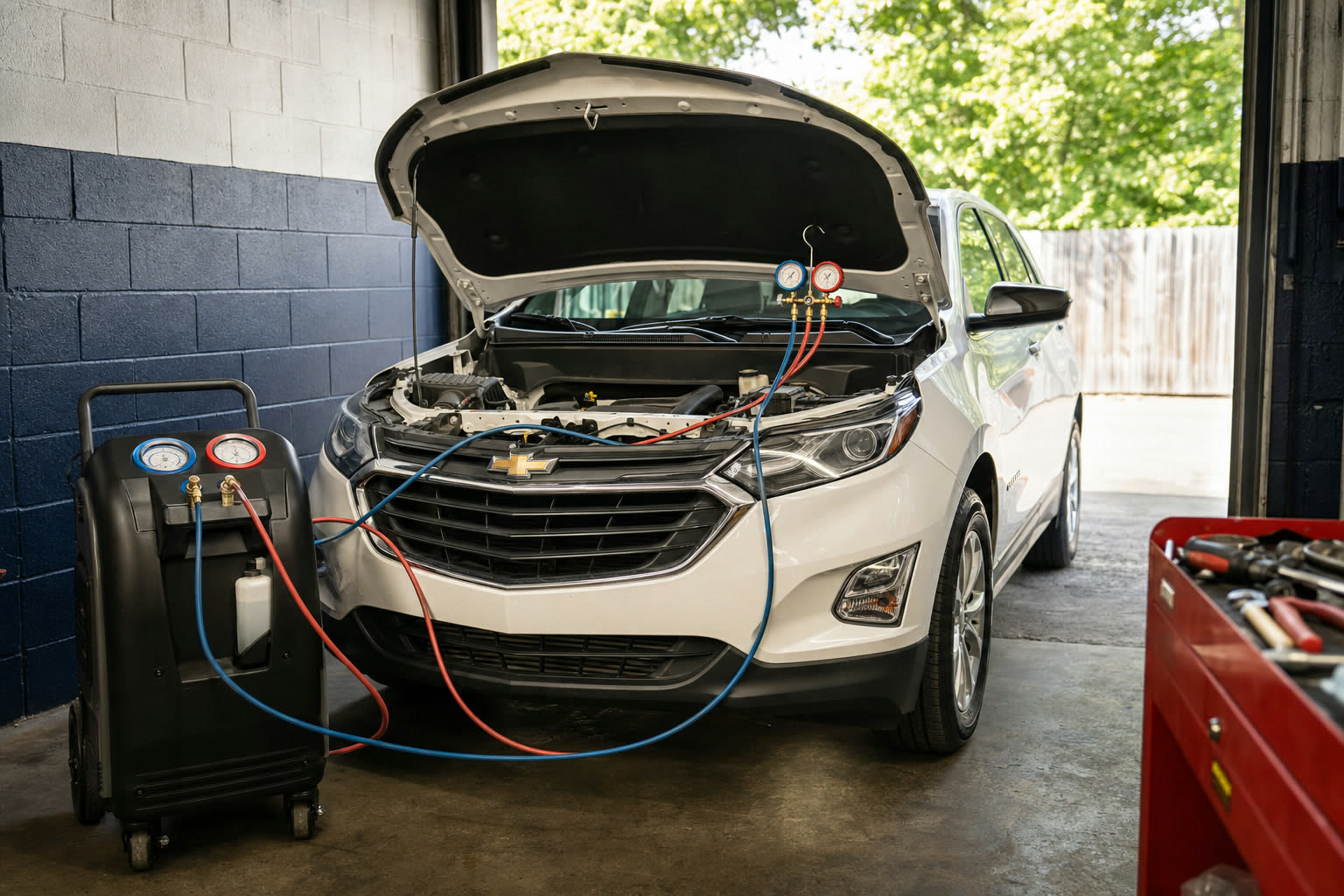
If your A/C also seems weak on hot days, it may be connected. The A/C condenser sits in front of the radiator and shares the same airflow and fan. Our A/C and heating repair team can check both at once.
The Bottom Line
An overheating engine is one of the few car problems where stopping right away really matters. Pull over, turn it off, and let it cool. After that, the fix is about finding the cause, not just topping off coolant. A leak, a stuck thermostat, a tired water pump or a fan that quit are all fixable when caught early. If your gauge has been running warm, reach out and we will find out why.
Questions Detroit drivers ask
No. Pull over safely and turn the engine off. Driving an overheating engine can cause serious damage, so call us and we will help you figure out the next step.
Coolant can leak onto hot engine parts and burn off before it hits the ground. It can also leak inside the engine. A pressure test helps us find where it is going.
In an emergency, water can get you to the shop once the engine has cooled. After that, the system needs the right coolant mix and the leak or failed part fixed.
Tees Auto Repairs at 9373 Hubbell Ave serves drivers across Detroit’s west side, including Warren Ave Community, Garden View, Weatherby, Fiskhorn, Joy-Schaefer, Barton-McFarland, Warrendale and Grandmont, plus nearby Dearborn, Dearborn Heights, Redford Township and Livonia. Call or text (313) 370-8603.