- Your owner’s manual and oil life reminder know more than a generic sticker.
- Short trips, cold starts and stop-and-go traffic often count as severe service.
- Detroit winters and humid summers both push toward more frequent changes.
- Check your oil level once a month and call if it is low, gritty or leaking.
You glance at the sticker in the corner of your windshield and realize you passed it a while ago. Or the oil life reminder just popped up and you are not sure how serious it is. Figuring out the right timing for an oil change Detroit drivers can count on comes down to one question: how do you actually drive? The answer is not the same for everyone, and it is not always the number on the sticker.
Here is the plain-English version of what oil does, how often to change it, and why short trips and cold mornings on the west side count as hard driving, even if your car never leaves the city.
What Oil Actually Does in Your Engine
Engine oil keeps metal parts from grinding against each other. It also carries heat away and picks up tiny bits of dirt and metal so the filter can catch them. Over time, oil breaks down. It gets dirty, it loses its ability to protect, and it stops doing its job as well as it should.
Fresh oil does not add power or make a car faster. What it does is help the engine last. Skipping changes rarely causes a problem you notice right away. The wear builds slowly, which is exactly why it is so easy to put off.
How Often Should You Change It?
The old rule was every 3,000 miles. Many newer cars, especially ones that use synthetic oil, can go much longer than that. The best guide is your owner’s manual, plus the oil life reminder on your dash if your car has one.
Here is the part a lot of people miss. Most owner’s manuals list two schedules. One is for normal driving. The other is often called severe service. And the severe list usually sounds a lot like everyday driving in Detroit:
- Lots of short trips where the engine never fully warms up
- Stop-and-go traffic
- Very cold weather
- Hot weather and long idling
- Dusty or dirty roads
- Towing or carrying heavy loads
If a few of those sound like your week, your car may need oil more often than the normal schedule says. Check the manual, or ask us to look it up for your exact car.
The Oil Change Schedule Detroit Winters Call For
Short trips are hard on oil. Think about a quick run from Warrendale to Rouge Park for a walk, a school drop-off at Henderson Academy, or a loop down Joy Rd to the store and back. The engine barely warms up before you shut it off. When an engine does not get fully warm, moisture and unburned fuel can stay in the oil instead of cooking off. Over time that can turn into sludge.
Cold makes it worse. Detroit’s January average low is 21°F. On mornings like that, oil is thicker when you start the car, and those first few seconds are when the engine gets the least protection. Add a winter full of short trips around Franklin Park or Joy Community, and your oil is working harder than the miles on the odometer suggest.
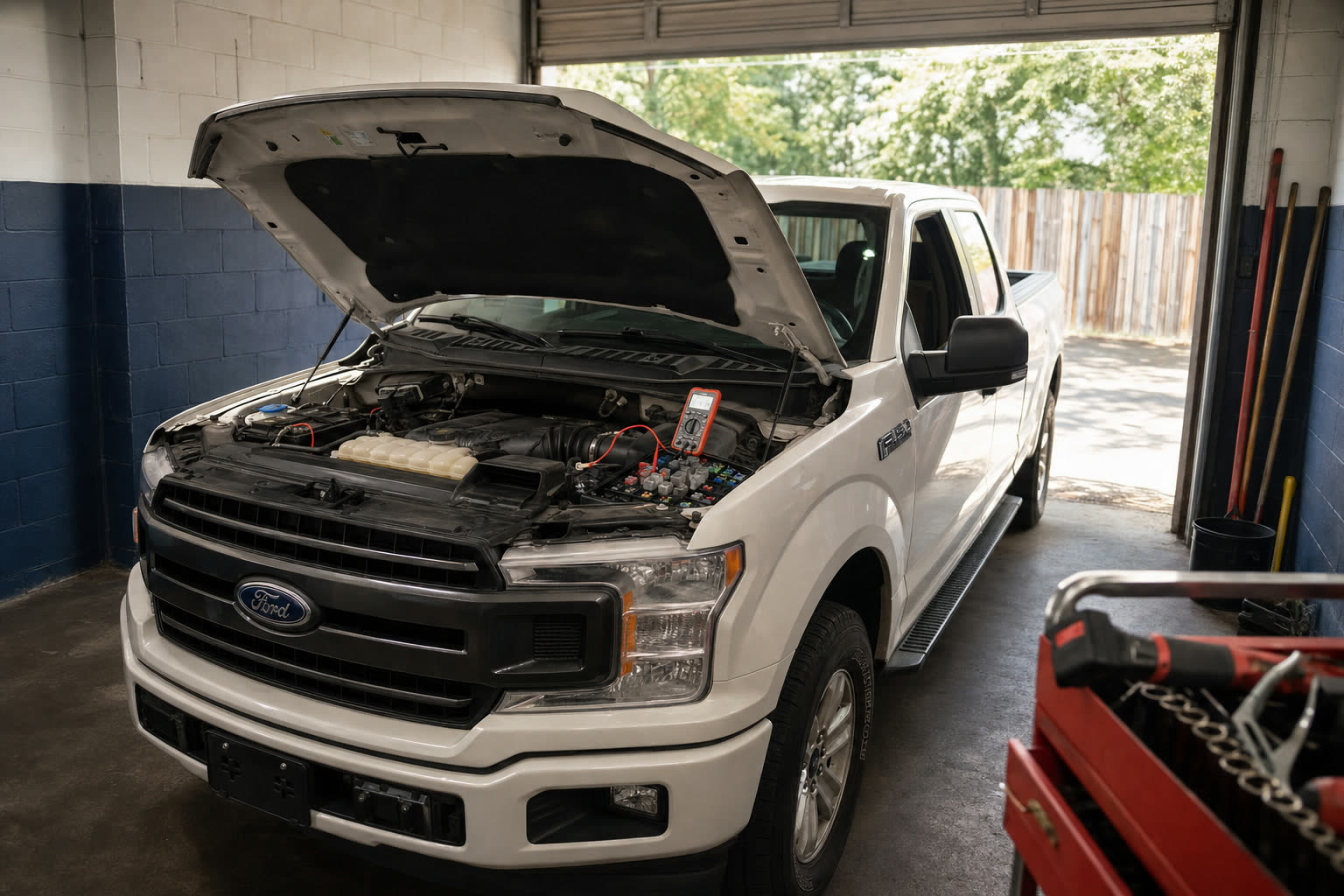
Summer has its own stress. Long idling in traffic on the Southfield Fwy on a humid July day, when the average high is 84°F, heats everything up. Heat breaks oil down too. So in Detroit, both seasons push toward the shorter end of your car’s schedule.
Signs It Is Time for an Oil Change
- The oil change light or oil life reminder is on
- You are past the date or mileage on your sticker
- The oil on the dipstick looks dark and gritty
- The oil level drops between changes
- The engine sounds louder than usual or starts to tick
- You smell oil or see spots where you park
- You honestly cannot remember your last one
Dark oil by itself does not always mean trouble. Oil darkens as it does its job. Gritty oil, low oil, or a new engine noise are better reasons to call.
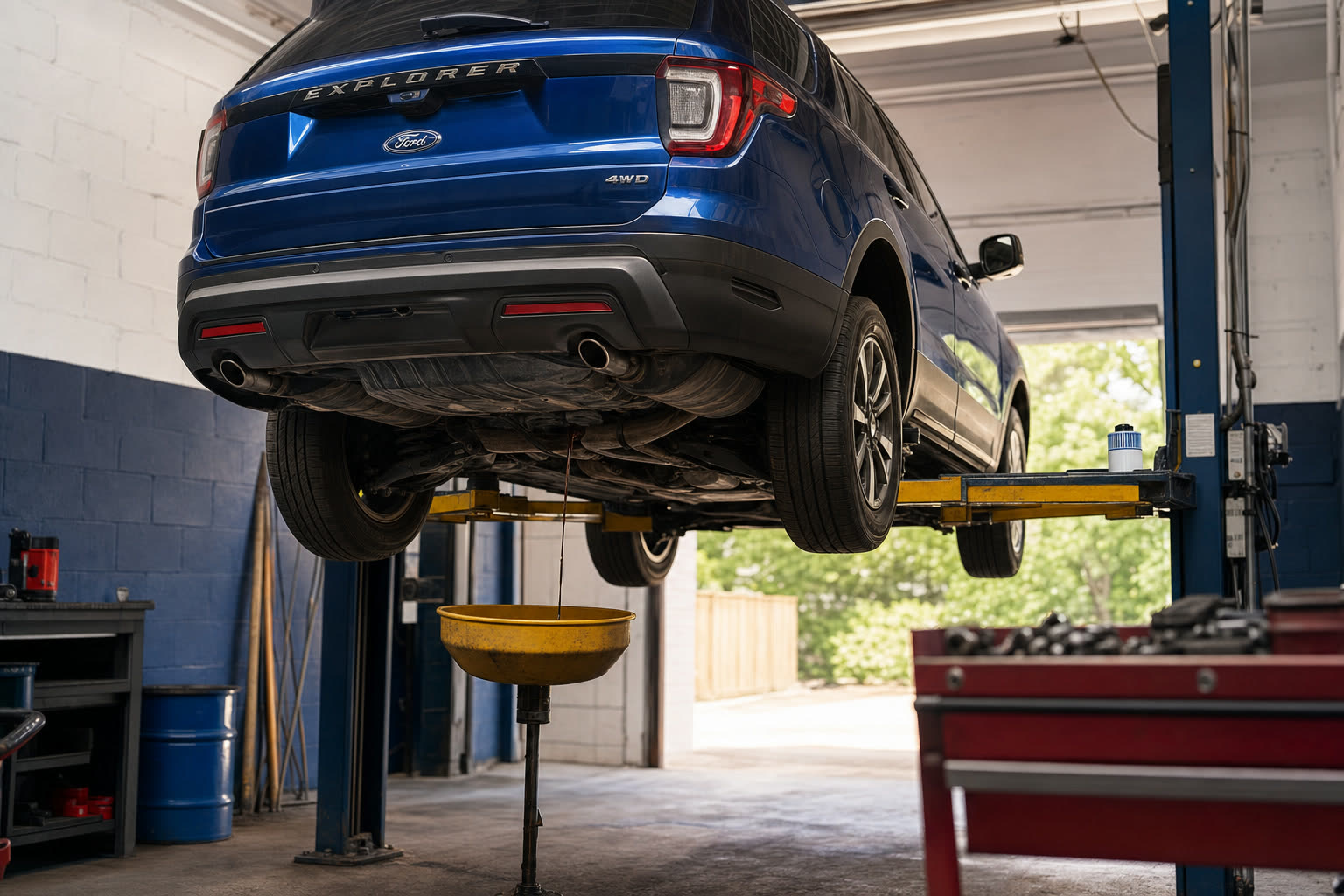
Very low oil, an oil pressure light that comes on, or oil that is actively leaking. Check the level and call the shop before you drive much farther.
You are past your sticker or oil life reminder, or you make lots of short winter trips. Plan an oil change in the next week or two.
A small seep that is not dripping yet, or oil that is a little dark but still at the right level. We note it and check again next time.
What Tees Does During an Oil Change
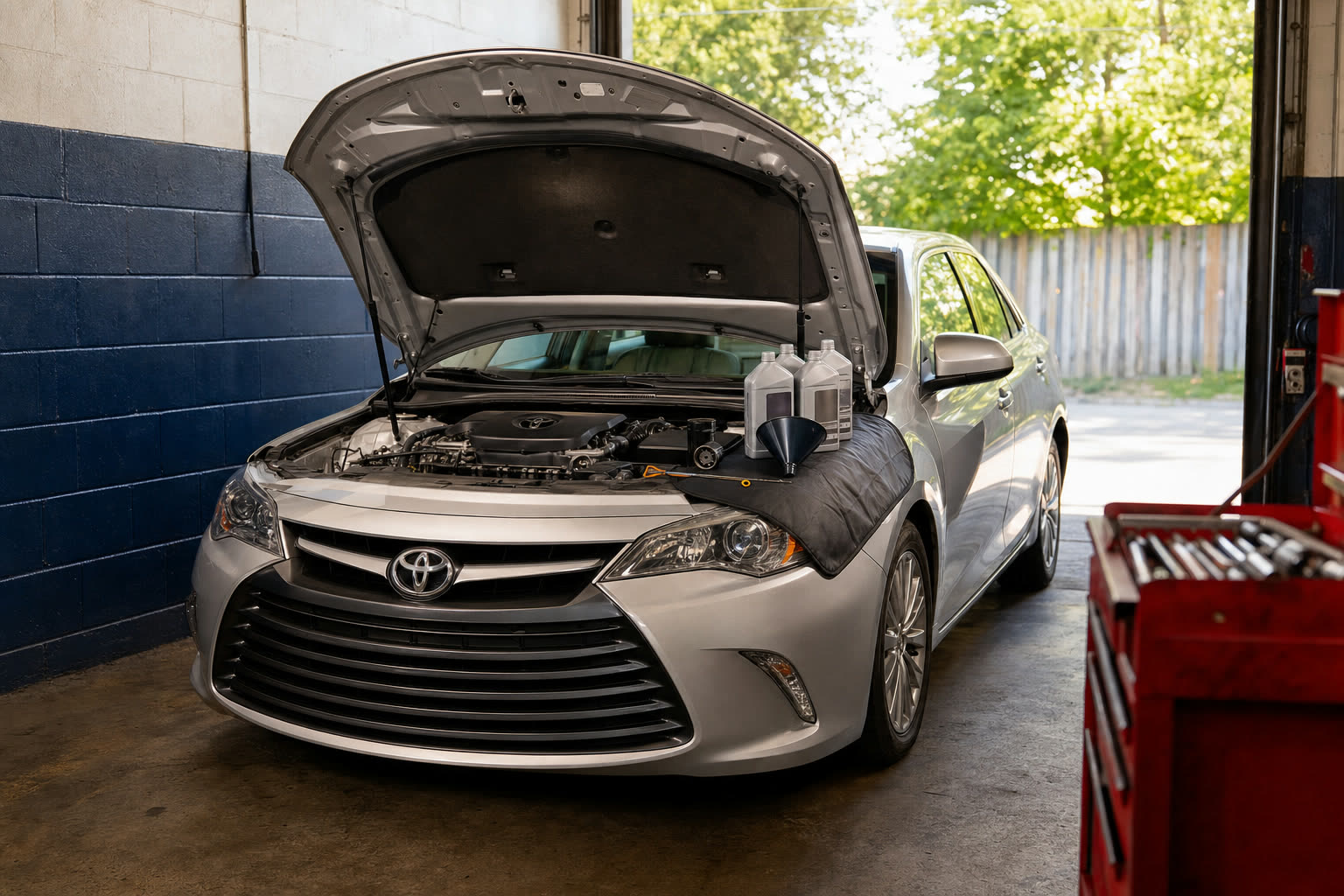
At Tees Auto Repairs, an oil change is simple. The old oil comes out, the drain plug gets checked, a new filter goes on, and we fill the engine with the type and amount it calls for. If your engine needs synthetic, it gets synthetic. If it does not, we will not push it.
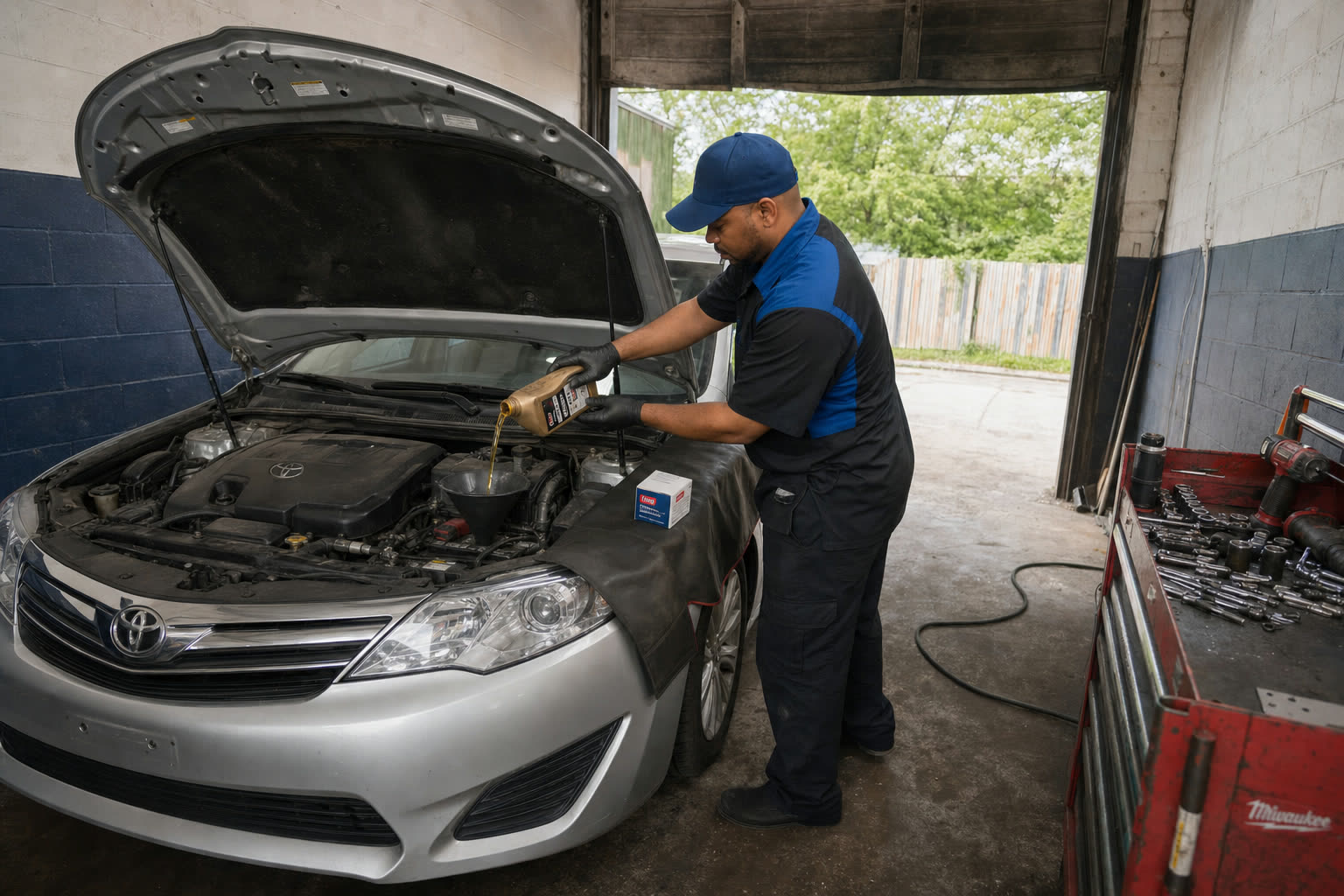
While the car is here, we take a quick, honest look at tires, fluids, belts and leaks. Anything we notice gets sorted into now, soon or monitor. If your air filter is dirty or a hose looks tired, we tell you. You decide what to do and when. Nobody is going to pressure you into a list of extras.
We can also help you figure out which schedule fits you. Tell us how you drive. Mostly short hops around the neighborhood? Long highway runs to work? A lot of idling? We will match that to what your manufacturer recommends, so your next sticker actually reflects your driving instead of a one-size guess. If the oil we drain looks unusual, like milky or full of grit, we will point it out and explain what it could mean.
Simple Tips to Stay on Schedule
- Find the severe service schedule in your owner’s manual and see if it matches how you drive.
- Check your oil level once a month with the engine off and the car on level ground.
- Do not ignore the oil life reminder, and only reset it after the oil is actually changed.
- Keep a simple note in your phone with the date and mileage of each change.
- If you mostly make short trips, fit in a longer drive now and then so the engine gets fully warm.
- If you notice a leak or a new noise, call before your next scheduled change.

An oil change is one of the simplest ways to look after your engine. You do not need to overthink it. Know which schedule fits your driving, keep an eye on the dipstick, and get a straight answer when you are unsure. If you have other questions, our FAQ page covers the basics, or you can reach the shop here.
Questions Detroit drivers ask
It is a helpful reminder, but it is a general guess. Your owner’s manual and oil life reminder know more about your car. If you make a lot of short trips or drive in the cold, you may need oil sooner.
Often, yes, if your engine is built for it and the manual says so. Your car’s schedule still matters more than the oil type. We use what your manufacturer recommends.
Old oil protects the engine less and can form sludge over time. One late change is usually not a disaster. Get it changed soon and check the oil level in the meantime.
Tees Auto Repairs at 9373 Hubbell Ave serves drivers across Detroit’s west side, including Warrendale, Franklin Park, Joy Community, Grandmont, Rosedale Park, Aviation Sub and Barton-McFarland, plus nearby Dearborn, Dearborn Heights, Redford Township and Livonia. Call or text (313) 370-8603.